App Idea Validation: How to Know It's Worth Building
Learn how to validate an app idea before building with cheap, fast tests any founder can run — before spending a dollar on development.

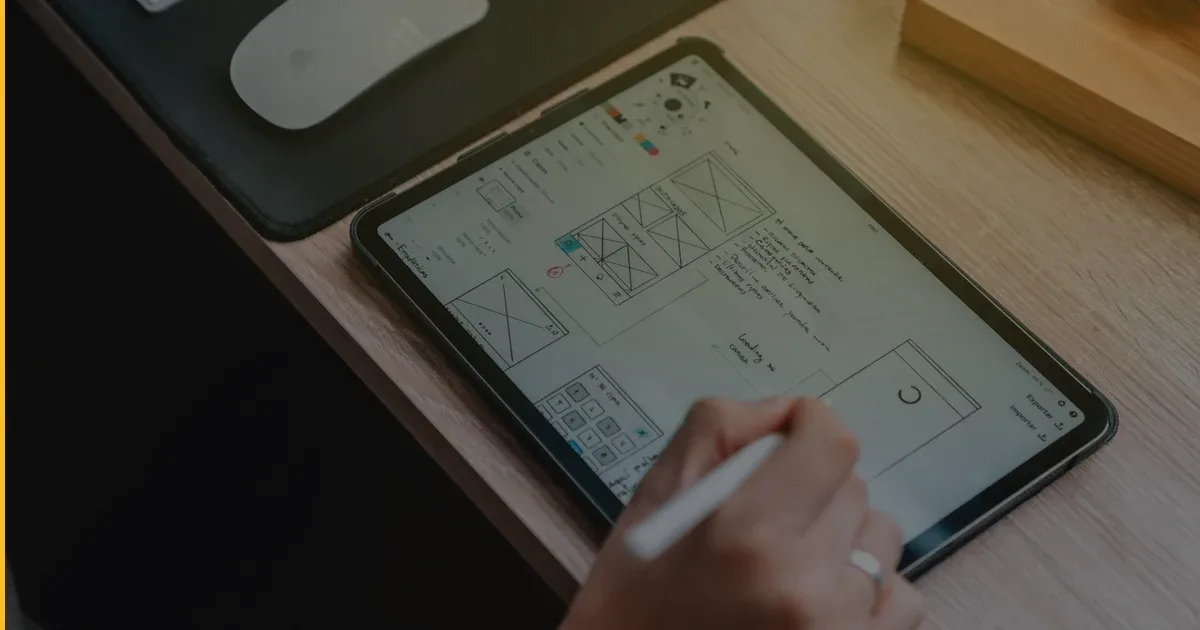
The most expensive mistake a founder can make is not a bad development partner or an overrun budget — it is building the wrong thing entirely. Knowing how to validate an app idea before building means running cheap, fast experiments that tell you whether real people will use and pay for your product, before a single line of code is written. Spend a few days (and a few hundred dollars at most) on validation, and you will either confirm a genuine opportunity or save yourself tens of thousands of dollars.
This guide walks you through every step. No technical background required.
Why Most App Ideas Skip Validation (and Pay for It)
Founders skip validation for two predictable reasons: excitement and urgency. The idea feels obvious, the market feels clear, and slowing down to test it feels like lost time. The numbers tell a different story. The majority of apps that fail do so not because they were built badly, but because nobody wanted them enough to keep using them.
We have shipped over a dozen apps across iOS, full-stack, and AI-integrated platforms. In every case where a founder came to us with validated demand — real evidence of user intent — the project moved faster, wasted less, and reached revenue sooner. Validation is not a delay. It is a head start.
Step 1 — State the Problem in One Sentence
Before testing anything, write this sentence:
“This app helps [specific type of person] do [specific task] without [current frustration].”
If you cannot complete that sentence precisely, you do not yet have a product — you have a category. A space-launch enthusiast who wants real-time countdown alerts and launch probabilities is a specific person with a specific need. That specificity is how Launchcast was born. Broad ideas (“an app for fitness”) produce broad, unvalidatable assumptions.
Step 2 — Check Whether the Problem Actually Hurts
A problem worth building for has three qualities:
- Frequency — it happens often enough that users will reach for an app regularly
- Intensity — the frustration is real, not theoretical
- Lack of a good current solution — existing tools are clunky, expensive, or absent
The fastest way to check all three is five to ten honest conversations with people in your target audience. Not friends who will be polite — strangers who have the problem. Ask them how they handle it today, how often it comes up, and what they have already tried. Listen for emotion: annoyance, resignation, workarounds. That is signal.
Step 3 — Build a “Fake Door” Before You Build the App
A fake door test is the single highest-ROI validation technique available to a non-technical founder. Here is how it works:
- Buy a domain and create a one-page landing site (tools like Carrd or Framer take under two hours)
- Describe the app’s core value proposition clearly — what it does and who it is for
- Add a call-to-action: “Join the waitlist” or “Get early access”
- Drive traffic to it via a small paid social campaign ($50–$150 on Meta or TikTok targeting your exact audience)
- Measure the conversion rate on the call-to-action
A conversion rate above 15–20% on a cold audience is a strong positive signal. Under 5% usually means either the problem is not painful enough or your messaging is not landing — both are worth knowing now.
Step 4 — Validate Willingness to Pay (Not Just Interest)
Interest and intent are not the same as payment. The cleanest test: ask people on your waitlist to pre-order or pay a small deposit. Even $9 is more informative than 500 email sign-ups, because it filters out the politely curious.
If charging upfront feels too aggressive for your market, an alternative is a paid survey or a brief paid consulting call where you solve the problem manually. If someone will pay you $20 to do manually what your app will do automatically, that is proof the problem has economic value.
Validation Methods at a Glance
| Method | Cost | Time | What It Proves |
|---|---|---|---|
| Problem interviews (5–10 people) | $0 | 1–2 days | Whether the pain is real |
| Landing page + waitlist | $50–150 | 2–3 days | Whether people are interested |
| Paid ad fake-door test | $50–200 | 3–5 days | Whether messaging resonates |
| Manual concierge MVP | $0–100 | 1–2 weeks | Whether users will pay |
| Paper / clickable prototype | $0–50 | 3–7 days | Whether the core flow makes sense |
Step 5 — Stress-Test the Business Model
A validated problem still needs a viable business model. The dominant model for mobile apps in 2026 is subscription — it produces predictable revenue and aligns your incentives with long-term user value. Before you build, answer these:
- What will you charge, and how often? (monthly, annual, one-time)
- What is the minimum number of paying users to cover your development cost? (If a standard app costs $20–45k to build, and you charge $9/month, you need roughly 230 active subscribers to recoup in a year — is that realistic?)
- What would make a user cancel? (The answer shapes what you must get right in version one.)
Step 6 — Define the Smallest Possible First Version
Once you have evidence of demand, resist the temptation to build everything. A simple MVP — one core job done exceptionally well — costs $5–15k and can launch in two to four months. Every feature added beyond the core multiplies cost and delays the moment you get real-world feedback.
Map every feature you want, then ask: “Could I launch without this?” Strike anything where the answer is yes. What remains is your version one.
Common Questions
How long does validation really take? Most founders can complete the core tests — interviews, landing page, and a small ad campaign — in one to two weeks. That is usually enough to make a confident go/no-go decision before spending on development.
What if my idea is genuinely new — there’s no competitor to compare? No competitor can mean no market exists, or it can mean a real gap. The way to distinguish: run the problem interviews and fake-door test. If you cannot get strangers to hand over an email address with $100 in ad spend, the demand is not there yet. If they sign up eagerly, you may have found something.
At what point should I talk to a development studio? After you have a clear problem statement, a target audience, and at least one piece of evidence that people want the solution — a waitlist, pre-orders, or strong interview signal. Coming with that foundation means the first conversation is about building, not justifying whether to build. You can explore our services or get in touch to see if we are a good fit.
What Validated Ideas Look Like in Practice
When the team behind Clove AI defined the core problem — people want personalized meal plans based on what is actually in their kitchen — they tested the concept with real users before building the AI layer. The feedback shaped which features landed in version one and which were cut. The result was a tighter launch, faster iteration, and a product that users understood immediately.
That is what good validation enables: clarity before commitment.
Ready to Build?
If you have worked through these steps and have evidence that your app idea solves a real problem for a real audience, you are in a strong position to move forward. We help founders at exactly this stage — turning validated concepts into shipped products across iOS, cross-platform, and AI-integrated apps.
Reach out to start the conversation. We will tell you honestly what it would take to build, how long it will take, and whether there is a smarter path to your first version.
Building something like this?
Fera Tech ships iOS & full-stack apps end-to-end. Tell us about your project.
Start a project