App Store Fees and Ongoing Platform Costs Clients Overlook
A founder's guide to App Store fees business costs — Apple's 15–30% cut, developer accounts, review delays, and how to factor them into your unit economics.

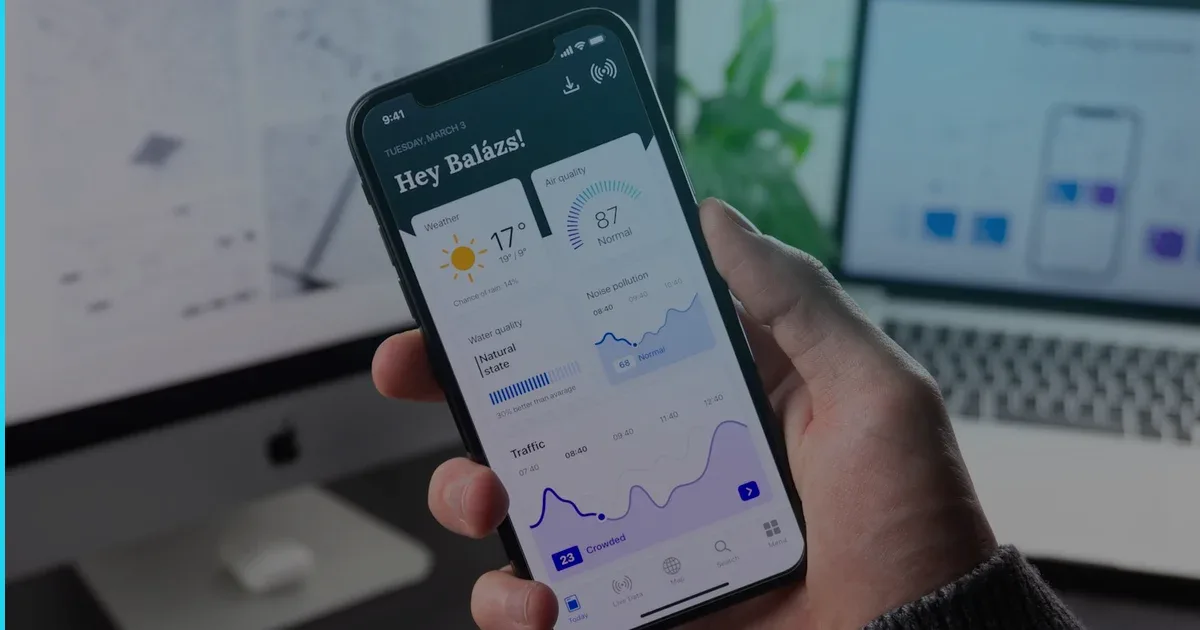
Most founders budget carefully for design and development, but far fewer budget for what comes after: the ongoing platform costs that Apple charges just for running a business on iOS. App Store fees and business costs catch clients off-guard more often than any other line item we raise at kick-off. This guide lays out every fee you should expect, explains how they affect your margins, and shows you how to bake them into your unit economics before you write a single line of code.
The Apple Developer Program fee
Before your app reaches a single user, you pay Apple $99 per year for an individual or company Apple Developer Program membership. Enterprises can pay $299/year for the Enterprise Program (internal distribution only — that account cannot publish to the public App Store).
This fee is small relative to development costs, but it is recurring and non-negotiable. Forget to renew and your certificates expire, your app stops updating, and — depending on your setup — push notifications may break. Put a calendar reminder on it.
Apple’s commission: the 15–30% cut explained
This is the big one. Apple takes a percentage of every dollar your users spend inside the app — paid downloads, in-app purchases, and auto-renewable subscriptions. The exact rate depends on your situation:
| Scenario | Apple’s cut |
|---|---|
| Standard developer, first year of a subscription | 30% |
| Standard developer, subscription renewed for 12+ months | 15% |
| Small Business Program (under $1M/year in proceeds) | 15% on all sales |
| Free apps with no in-app purchases | 0% |
The Small Business Program matters a great deal for early-stage startups. If your app earns less than $1 million in net proceeds in a calendar year, you qualify for the 15% rate — you have to apply, but approval is near-automatic. The catch: exceed $1 million and you move to 30% for the rest of that year.
What this means in practice: A $9.99/month subscription at 30% leaves you with roughly $6.99 net — before cloud infrastructure, support, and third-party services. Plan your unit economics around the net figure, not the sticker price.
How the commission affects your pricing model
This is where most business plans go wrong. Founders set a price based on what the customer pays, then discover the margin is thinner than expected once Apple takes its share.
A few practical rules we share with clients during the discovery phase:
- Price to net, not to gross. Work backward from the margin you need. If you need $8/month per user to be profitable, your price must be at least $11.50 (at 30%) or $9.50 (at 15%).
- Subscriptions outperform one-time purchases. Apple’s 15% renewal rate makes annual subscriptions with a monthly conversion funnel the most favorable structure for most SaaS-style apps.
- Physical goods and services are exempt. Apple’s commission only applies to digital in-app purchases. Payments for physical products or services rendered outside the app flow through your own processor at your own rates.
Our own apps — Launchcast and Clove AI — both use subscription models, and we factored this split into pricing from the start. Apps built without this planning often end up repricing within six months, which creates friction with early adopters.
App review timelines as a hidden cost
Every build you submit to the App Store goes through Apple’s review process. As of 2026, most reviews complete within 24–48 hours. But that average hides the tail:
- Expedited reviews (requested when a critical bug is live) are not guaranteed and can still take days.
- Reviews during Apple’s major release windows — typically September/October when new iOS versions ship — often slow down.
- A rejection resets the clock. If your build is rejected on day two, you fix it and start again.
Why this is a business cost: A payment flow bug discovered on Friday may not reach users until Monday at the earliest, even if your team ships a fix the same day. Every hour that bug is live costs conversions or generates refund requests. Fast-moving apps that release weekly must account for review time in their planning — and for the support burden that accumulates during those windows.
This is especially true for time-sensitive apps. Our work has taught us to build review buffers into every launch plan, rather than promising a “same-day hotfix” that Apple’s process simply does not allow.
Other ongoing platform costs worth tracking
Beyond the commission and developer fee, here are the line items that appear in real client budgets after launch:
- TestFlight distribution — Free, but managing beta groups and gathering structured feedback takes engineering time.
- App Store Connect metadata updates — Screenshots, preview videos, and descriptions must be updated for each locale and new iOS display size. This is surprisingly time-consuming across a multi-language app.
- Certificate management — Certificates expire, provisioning profiles need rotation, and push notification certificates must be renewed. This is maintenance work, not feature work.
- Third-party SDK fees — Analytics, crash reporting, and A/B testing tools each have their own pricing tiers, separate from Apple’s commission.
- Privacy compliance — Apple’s App Privacy labels require review whenever you add a new SDK or data collection point. Non-compliance can trigger a rejection on any future update.
Factoring platform costs into your unit economics: a checklist
Before you finalize pricing or a fundraising model, work through this list:
- Identify your App Store commission rate (15% or 30% based on revenue tier and subscription renewal behavior).
- Calculate your net revenue per user, per month or per transaction, after Apple’s cut.
- Add your server/infrastructure cost per user (hosting, database, API calls, AI inference if applicable).
- Add a pro-rated share of your annual developer account fee and any third-party SDK costs.
- Subtract your estimated support cost per user.
- The result is your contribution margin per user. Build your customer acquisition cost (CAC) ceiling from there.
If the math does not work at 30%, check whether you qualify for the Small Business Program and whether restructuring your pricing (annual vs monthly, tiered plans) improves the margin profile. We walk through this exercise with every client during our services engagement — because a beautifully built app that loses money at scale is not a success.
Common questions
Do I pay Apple’s commission on free trials? No. Apple does not charge a commission on free trial periods. You only pay when a user is billed. Free trials that convert to paid subscriptions are one of the most effective ways to reduce your effective commission rate, because the acquisition cost per paying user is lower.
Can I avoid Apple’s commission by directing users to pay on a website? This is a fast-moving area. Apple has faced legal pressure — including US court rulings in Epic vs. Apple — to allow developers to link out to external payment options in some markets. Rules vary by region and are still evolving. Check the current App Store guidelines with your legal counsel before building an external payment flow; violations can get your app removed.
What happens if I miss my developer account renewal? Your app stays on the App Store for a period, but you lose the ability to push updates, your in-app purchase products may become unavailable, and push notification certificates can break. Renew before expiration — there is no grace period that Apple guarantees.
Plan the platform costs before you plan the features
The App Store is a powerful distribution channel, but it is not free. Apple’s 15–30% commission, the $99 annual fee, review timelines, certificate maintenance, and compliance overhead are real costs that compound as you grow. Founders who build them into their unit economics from day one avoid painful surprises when investors ask why gross margin is lower than the industry benchmark.
If you are planning an iOS app and want to walk through the full cost picture — development, launch, and ongoing platform fees — reach out and we can review your model before you commit to a pricing structure or a development budget. You can also browse our past work and our full service offering to see how we engage with clients from discovery through launch and beyond.
Building something like this?
Fera Tech ships iOS & full-stack apps end-to-end. Tell us about your project.
Start a project