E-Commerce iOS App Cost: What Affects the Price Most
A clear breakdown of e-commerce iOS app development cost in 2026 — by catalog size, payments, and personalisation — so you can plan your budget accurately.

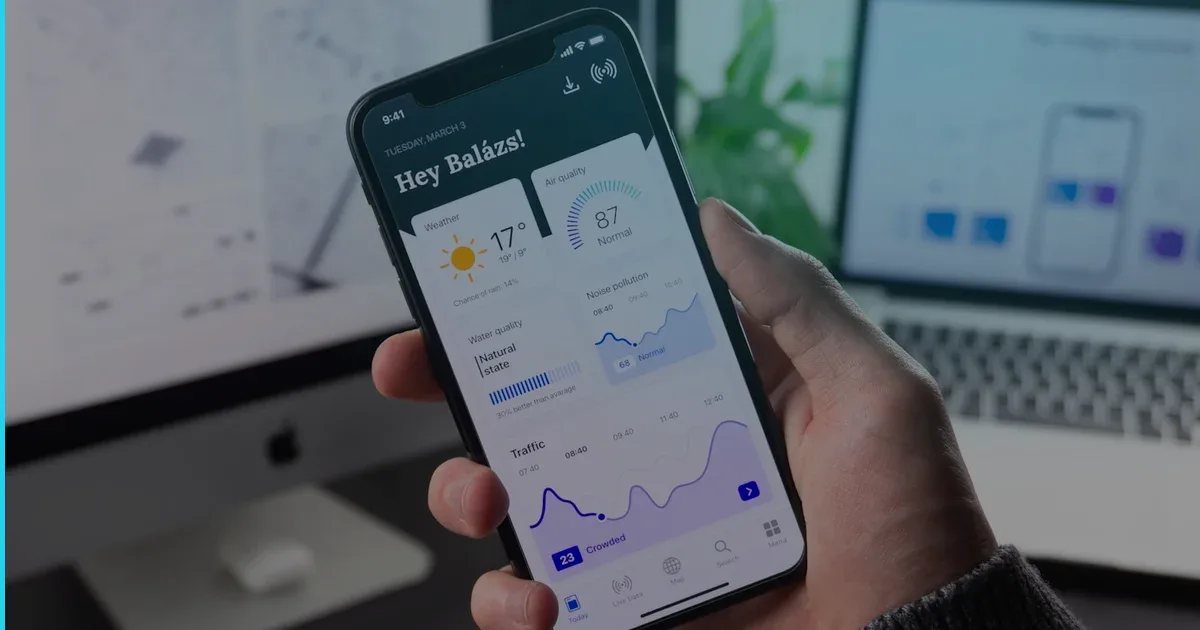
If you have ever searched for e-commerce iOS app development cost and walked away more confused than when you started, you are not alone. Estimates online range from “a few thousand dollars” to “half a million” — a spread wide enough to be meaningless. The truth is that cost is not random. It is driven by a small number of decisions your business has already made or will make soon. This guide maps those decisions to realistic 2026 price ranges, so you can walk into a discovery call with a working budget in hand.
The baseline: three cost tiers for e-commerce iOS apps
Before diving into the drivers, here is the working range we use with clients:
| Tier | What it covers | Typical cost | Timeline |
|---|---|---|---|
| Simple MVP | Small catalog, basic cart, one payment method, no accounts | $5,000 – $15,000 | 2–4 months |
| Standard retail app | Mid-size catalog, multiple payments, user accounts, basic recommendations | $15,000 – $45,000 | 4–7 months |
| Complex / AI-powered | Large catalog, real-time inventory, AI personalisation, loyalty, B2B features | $45,000 – $120,000+ | 7–12+ months |
These figures cover design, iOS development, backend, QA, and App Store submission. They do not include third-party subscription fees (e.g., payment gateways, CMS platforms) or ongoing maintenance, which typically runs 15–20 % of the build cost per year.
The three biggest cost drivers
1. Catalog size and product complexity
A boutique selling 50 handmade items is a fundamentally different engineering problem from a retailer managing 10,000 SKUs across dozens of categories, variants, and warehouses.
What drives the cost here:
- Variants and attributes. Each product that comes in multiple sizes, colours, or configurations needs a data model that handles every combination cleanly. Two thousand products with dynamic variant rules is a very different problem from fifty products with fixed options.
- Search and filtering. A small catalog can survive with basic keyword search. A large one demands faceted filtering, typo tolerance, and fast indexing — all of which take engineering effort and often a specialist search service.
- Real-time inventory sync. If stock levels live in an ERP or multiple fulfilment locations, the app needs a reliable sync layer so the app never lets a customer buy something already sold out.
- Rich media. Multiple high-resolution images or video demos per product increase storage, CDN, and rendering complexity.
A small, well-structured catalog can ship in the simple tier. A large or dynamically managed one almost always reaches the standard tier or above.
2. Payment gateway complexity
Payments look simple on the surface — the customer taps “Buy” and money moves. In practice, the payment layer is often where budgets balloon.
What changes the price:
- Number of providers. Supporting Apple Pay alone is straightforward. Add Stripe, PayPal, local payment methods (Payme, Click, or other regional gateways for CIS markets), and instalment options (BNPL), and each integration needs its own implementation, testing, and maintenance path.
- Multi-currency and localisation. Displaying prices in local currencies, handling VAT or sales tax rules per region, and settling in multiple currencies each add complexity.
- Subscriptions and recurring billing. If you sell subscription boxes or memberships, Apple’s In-App Purchase rules apply — which means a separate implementation path alongside any web checkout you already have.
- Compliance and security. PCI-DSS scope, fraud detection rules, and 3D Secure flows are non-negotiable in most markets. These are not features you can skip; they are a base requirement that takes engineering time.
For most retail apps targeting a single market, one or two payment providers is the right call. Every additional provider or billing model adds approximately $2,000–8,000 in development and testing cost, depending on the provider’s API quality.
3. Personalisation and AI features
This is where the gap between a basic app and a genuinely high-converting one becomes visible — and where cost can escalate quickly if not scoped carefully.
Personalisation features by cost level:
- Basic (low cost addition): Recently viewed products, saved wish lists, order history, and simple “you might also like” carousels based on category browsing.
- Mid-tier: Rule-based recommendations (customers who bought X also bought Y), personalised push notifications based on browse history, and segmented promotional banners.
- AI-driven (high cost): On-device or server-side ML models that learn individual user preferences, visual search (point the camera at a product to find it in the catalog), AI-powered chat support integrated with live inventory, and dynamic pricing or offer personalisation.
AI features are no longer exotic — they are increasingly expected in fashion, home goods, and grocery. Our work building Clove AI, an AI kitchen assistant that personalises meal suggestions in real time, gave us first-hand experience with how much effort it takes to make recommendations feel natural. The engineering is real, but so is the conversion uplift.
If your roadmap includes AI personalisation, plan for the complex tier from the start. Bolting it on later always costs more.
Other factors that move the number
Beyond the three main drivers, these decisions also shift cost noticeably:
- User accounts and social login. Sign in with Apple is required on iOS when you offer any other sign-in option. Adding Google, Facebook, or email/password multiplies the auth surface area.
- Loyalty and rewards. Points systems, referral mechanics, and tiered membership each require their own data models and UI flows.
- Order tracking. Real-time status with push notifications and delivery window estimates add moderate complexity.
- Editorial content. Lookbooks and shoppable editorial pages need a CMS integration and custom rendering.
- B2B or wholesale mode. Serving retail and wholesale buyers from the same app — with different pricing tiers and order minimums — adds significant complexity.
What you can control to keep costs in range
A well-run e-commerce iOS project does not need to hit the top of every range. Here is how to stay on budget without sacrificing quality:
- Define your MVP catalog. Launch with your bestselling 20 % of products and expand once the app is live and generating revenue.
- Choose one primary payment provider. Add others in a phase two update.
- Start with rule-based recommendations. Basic collaborative filtering delivers most of the business value at a fraction of the ML cost.
- Use a headless CMS for content. Your merchandising team can update banners and collections without an app release.
- Invest in a discovery phase. Two to four weeks of structured scoping surfaces hidden requirements before they become expensive mid-build change orders. We cover why this matters in our services overview.
Common questions
Can I build an e-commerce iOS app for under $10,000? Yes, if your catalog is small (under 100 SKUs), you need only one payment method, and you are comfortable with a lean feature set. A focused MVP in this budget is possible and often the right starting point. View examples of what we have shipped across different budgets in our work.
Should I build native iOS or cross-platform? For e-commerce, native iOS typically delivers better performance for image-heavy catalogs, smoother animations, and tighter Apple Pay integration. Cross-platform (Flutter, React Native) is worth considering if you need iOS and Android simultaneously on a fixed budget. We break down the trade-offs in detail on the blog.
How long does a standard e-commerce iOS app take to build? A standard retail app — mid-size catalog, two payment methods, user accounts, and basic recommendations — typically takes four to seven months from kick-off to App Store approval. Complex apps with AI features or deep integrations run seven to twelve months or more.
What ongoing costs should I expect after launch? Budget for the Apple Developer Program ($99/year), backend hosting ($200–2,000/month depending on traffic), payment gateway fees (1.5–3 % per transaction), and maintenance (15–20 % of build cost per year).
Getting the budget right before you start is the difference between a project that launches on time and one that stalls at the halfway mark. If you are planning an e-commerce iOS app and want an honest scope estimate based on your specific catalog, payment requirements, and personalisation goals, get in touch with the studio. We will tell you what it will actually take.
Building something like this?
Fera Tech ships iOS & full-stack apps end-to-end. Tell us about your project.
Start a project