How Much Does an MVP App Cost — and What Should It Include?
A clear breakdown of MVP app development cost in 2026: realistic budget floors, what to include, what to cut, and how to avoid wasting your first $50k.

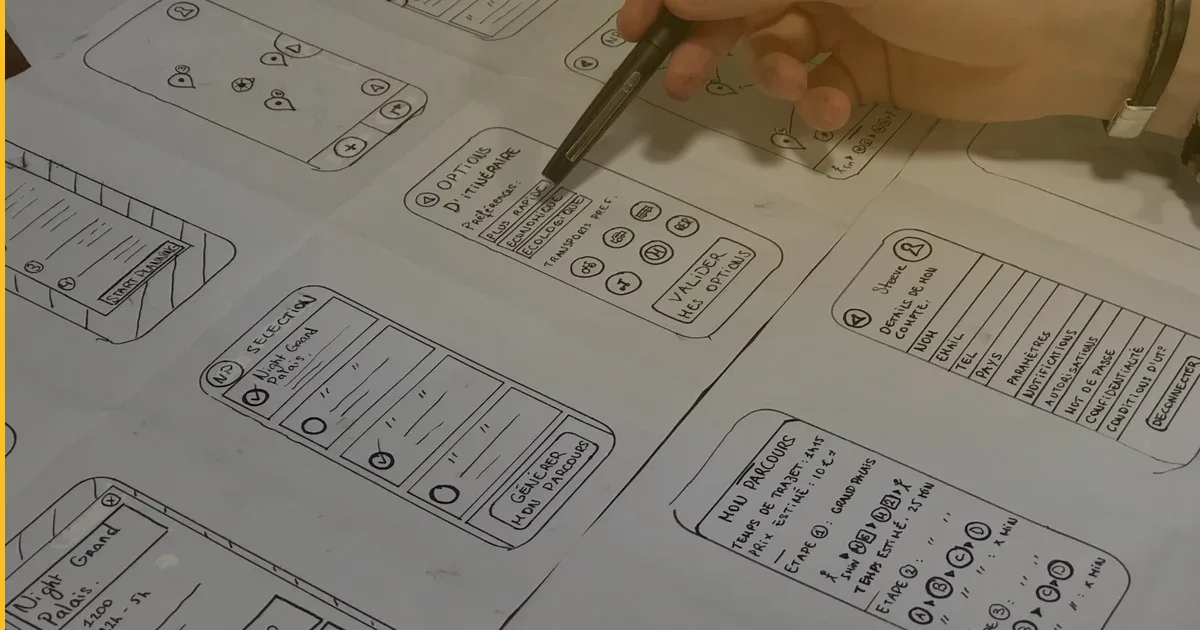
If you’re a founder or business owner pricing out a mobile app for the first time, you’ve probably seen quotes ranging from $5,000 to $500,000 for what sounds like the same product. That gap isn’t a scam — it reflects radically different definitions of what an MVP actually is. Understanding MVP app development cost starts with agreeing on scope, because scope is the only variable you fully control.
This post defines what a real MVP includes, gives you honest budget floors for 2026, and tells you exactly what to cut — and what you absolutely cannot cut — without sinking the product before it gets a chance.
What “MVP” Actually Means (and What It Doesn’t)
MVP stands for Minimum Viable Product. The key word is viable — not minimal. An MVP is the smallest version of your product that:
- Solves one core problem for one specific audience
- Works reliably enough that real users can test it
- Produces feedback you can act on
What an MVP is not: a prototype with no backend, a demo you show investors, or a half-finished app you plan to “fix later.” Shipping something broken to save money is the fastest way to destroy early user trust and burn your budget twice.
The apps we’ve built and launched — from our own products like Launchcast and Clove AI to client work you can review at /#work — always start with this question: what is the one thing this product needs to do well for someone to come back tomorrow?
What an MVP Should Include
There is a short, honest list of what belongs in an MVP and what doesn’t.
Must-haves:
- Core user flow, end-to-end (the thing that delivers the main value)
- User authentication (sign up, log in, password reset)
- Basic data persistence (cloud or local, depending on the app)
- App Store submission package (icons, screenshots, privacy policy, compliance)
- Crash reporting and basic analytics
- Error handling that doesn’t leave users stranded
Nice-to-haves (defer to v1.1):
- Advanced onboarding sequences
- Social sharing and referral mechanics
- Push notification campaigns
- Multiple subscription tiers
- Admin dashboards and internal tooling
- Dark mode, iPad layout, and full accessibility pass
Do not ship:
- Features your users haven’t asked for
- Multiple platforms simultaneously (pick iOS or Android first)
- Native AI integration unless AI is the core value proposition
The goal is not to build fast and cheap. It is to build the right thing and validate it before you invest in the full roadmap.
MVP App Development Cost in 2026
Budget ranges vary by complexity — here is an honest breakdown based on what we see in the market and quote ourselves.
| MVP Type | What It Covers | Realistic Budget |
|---|---|---|
| Simple MVP | Auth, 3–5 screens, basic CRUD, App Store submission | $5,000 – $15,000 |
| Standard MVP | Auth, core feature set, REST API, 1 integration, analytics | $15,000 – $45,000 |
| Complex MVP | AI/ML features, real-time data, custom backend, multiple integrations | $45,000 – $120,000+ |
Most client projects with genuine business value land in the $15,000 – $50,000 range. Below $15,000, you are likely buying a template with your branding applied, not a purpose-built product. Above $50,000, you are probably funding a full v1.0 — which is fine, but call it what it is.
Why the floor is $15,000 for a real MVP
A standard MVP requires a minimum of 200–400 hours of skilled engineering work. At boutique studio rates of $60–$120/hour, that math puts you at $12,000–$48,000 before you add design, QA, and App Store prep. Anyone quoting you $4,000 for a “complete iOS app” is cutting something — usually quality, security, or their own experience.
How Long Will It Take?
Timeline follows complexity closely:
- Simple MVP — 2 to 4 months
- Standard MVP — 4 to 7 months
- Complex MVP (AI, real-time, custom infra) — 7 to 12+ months
A common mistake is compressing timelines by adding more people. Software rarely scales that way. A two-person team that knows your domain deeply will outperform a six-person team ramping up on your project every time.
What to Cut Without Sinking the Product
Scope negotiation is a skill. Here is a practical checklist for deciding what stays and what moves to a later release.
Cut it if:
- It isn’t part of the core user journey
- You have no evidence users want it (no interviews, no waitlist data)
- It requires a third-party integration that could delay launch by weeks
- It’s “table stakes” only because a competitor has it — not because your user needs it on day one
- It’s a “nice to have” you’d use yourself but can’t describe a user asking for
Keep it if:
- Removing it breaks the core loop
- It’s required for App Store compliance or user privacy
- It’s the one thing that makes your product different from everything else in the category
- Users in discovery interviews mentioned it unprompted
When we scoped Launchcast, the MVP included one screen that mattered: the next launch, with a countdown and a notification. Everything else — historical data, filters, social features — came after we knew people were opening the app daily. Same principle applied when building Clove AI: the MVP was one kitchen assistant conversation flow. Nothing more.
Choosing the Right Development Partner
How you spend your MVP budget matters as much as how much you spend. The three main options:
| Option | Hourly Rate | Best For |
|---|---|---|
| Large agency (US/EU) | $150 – $250/hr | Enterprise compliance, big brand oversight |
| Boutique studio | $60 – $120/hr | Founders wanting senior execution + strategic input |
| Freelancer | $20 – $60/hr | Simple, well-defined builds with low ambiguity |
For an MVP — where the scope is still evolving and decisions happen fast — a boutique studio with direct engineer access tends to produce the best result per dollar. You get the strategic thinking of an agency without the account-management overhead, and you don’t carry the coordination risk of a solo freelancer.
See how we approach this on our services page.
Common Questions
Q: Can I build an MVP for under $10,000? Yes, but with significant constraints. You are looking at a template-based build, a very narrow feature set, or offshore development with limited oversight. For a product you intend to monetize or raise funding on, $10,000 rarely gets you something durable. Budget $15,000–$30,000 for a first real product.
Q: Should I build for iOS first or launch on both platforms? iOS first, almost always. iOS users monetize better, provide higher-quality feedback, and are faster to reach through the App Store. Once you have product-market fit evidence, port to Android. Trying to ship both at once at MVP stage doubles your cost and splits your focus.
Q: What’s the biggest mistake founders make with MVP budgets? Underscoping what they need and overscoping what they want. The first leads to a product that can’t be tested properly. The second leads to running out of money before you know if the core idea works. A good development partner will push back on both — that pushback is part of what you’re paying for.
If you’re mapping out your MVP scope and budget and want a straight answer on what your idea will actually cost to build, reach out at /#contact. We scope projects honestly, tell you what to cut, and build what’s left to a standard worth launching.
Building something like this?
Fera Tech ships iOS & full-stack apps end-to-end. Tell us about your project.
Start a project