Native App vs Web App: How to Choose for Your Business
Choosing native app vs web app for business? This 2026 decision framework covers cost, UX, speed, and which option fits your goals and budget.

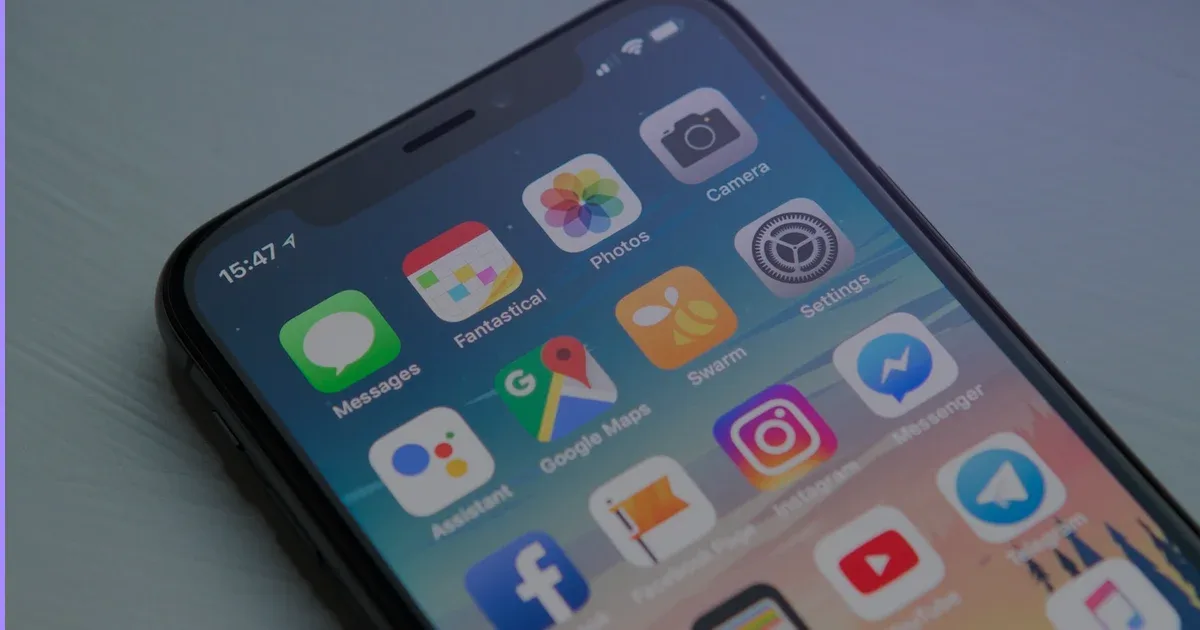
When founders come to us before a build, one question comes up more than almost any other: “Do I need a native app, or can I just build a web app?” It sounds like a technical question, but it is really a business decision — one that affects your budget, your launch timeline, your user experience, and how your product grows over the next few years.
This guide gives you a practical native app vs web app for business framework to make that call with confidence, even if you have never shipped a product before.
What Each Option Actually Means
Before weighing trade-offs, a quick plain-language definition of each.
A native app is built specifically for one platform — iOS or Android — using that platform’s tools and guidelines. It lives on the user’s home screen, downloads from an app store, and has full access to the device’s hardware: camera, GPS, Face ID, push notifications, Bluetooth, and more.
A web app runs in a browser. Users visit a URL rather than downloading anything. A progressive web app (PWA) is a web app that can be added to the home screen and behave more like a native app, but it still runs through the browser engine and has more limited device access.
A cross-platform app (built with frameworks like React Native or Flutter) is a middle path: one codebase that compiles into native-feeling apps for both iOS and Android. We cover that option in its own section below.
The Core Trade-Offs at a Glance
| Factor | Native iOS/Android App | Web App / PWA |
|---|---|---|
| Upfront cost | $15–120k+ depending on scope | $5–30k for most products |
| Timeline to launch | 4–12 months | 2–5 months |
| Device features | Full access (camera, GPS, NFC, etc.) | Limited or none |
| Push notifications | Yes, reliable | Limited on iOS; improving on Android |
| Offline use | Yes | Partial (service workers) |
| App Store distribution | Required (30% fee applies) | Direct via URL, no store cut |
| Discoverability | App Store search + ASO | Google/SEO + direct |
| Update speed | App store review (1–3 days) | Instant |
| User engagement | Higher (home screen presence) | Lower on average |
When a Native App Is the Right Call
Choose native when your product’s value depends on the device itself or when high engagement is critical to retention.
Use cases that almost always need native:
- Hardware-dependent features. Real-time AR, heart-rate monitoring, NFC payments, Bluetooth device pairing, background GPS tracking, or advanced camera processing all require native APIs. Our space launch tracker Launchcast uses background notifications and precise scheduling that would be degraded on web.
- Consumer apps where retention is everything. Home screen placement, reliable push notifications, and face/touch authentication all drive daily active use. Gaming, fitness, food, and lifestyle apps live or die by these.
- Products in the App Store ecosystem. If your monetisation strategy is subscription-based and your users expect to pay through Apple Pay or Google Pay in-app, native is the natural fit. We see this consistently across the client work we have shipped.
- AI-powered features that run on-device. In 2026, on-device AI (Apple Intelligence, Core ML) requires native integration to run privately, quickly, and without API cost per request. Our AI kitchen assistant Clove AI uses on-device models for instant, offline-capable food intelligence — something a web app could not replicate at that quality.
- Any app where loading speed and animation smoothness define the experience. Native rendering is simply faster and more fluid than a browser.
When a Web App Makes More Sense
Web apps and PWAs have improved dramatically. For the right product, they are a genuinely smart choice — not a compromise.
Web is the better starting point when:
- You need to validate the idea before committing. If you are not sure whether users will pay for your product, a web MVP at $8–20k lets you test the market before spending $40–80k on native. Fail fast, fail cheap.
- Your product is primarily content or data-driven. Dashboards, directories, booking tools, lead management, e-learning platforms — these work well in a browser and users do not expect a native app.
- You need to reach users on desktop and mobile equally. Web is inherently cross-device. Native apps are mobile-first by definition.
- Your users update infrequently or discovery happens via Google. SEO is a meaningful acquisition channel for B2B SaaS and content tools. An app store adds friction for users who would rather bookmark a URL.
- Budget is tight and speed to market is critical. A well-built PWA can ship in 2–4 months and still provide a polished, app-like experience on modern phones.
The Cross-Platform Middle Path
If you decide you do need native — but you need to cover both iOS and Android without doubling the budget — cross-platform frameworks like React Native or Flutter are worth considering.
A single React Native codebase typically costs 30–50% less than two fully separate native builds, and covers 80–90% of use cases. The remaining 10–20% is where you notice the difference: deep platform integrations, complex animations, and cutting-edge OS features sometimes lag behind or require custom native modules.
We build in Swift for pure iOS projects and in React Native or Flutter when the brief calls for both platforms. The right tool depends on your product’s specific requirements — not a blanket rule.
A Simple Decision Framework
Work through these four questions in order:
- Does your product rely on hardware features? Camera, GPS, Bluetooth, NFC, on-device AI → native required.
- Is high daily engagement or home screen presence essential? Lifestyle, fitness, entertainment, productivity → native strongly preferred.
- Are you validating an idea or early on a tight budget? → Start with a web MVP, add native later once traction is proven.
- Do you need both iOS and Android on day one? → Cross-platform framework is likely the most efficient path.
If you answered yes only to question 3, a web app is your first move. If you answered yes to questions 1 or 2, plan for native from the start — retrofitting later is expensive.
What This Means for Your Budget in 2026
Realistic ranges for each path, based on current market rates:
- Simple web app / PWA MVP: $5–15k, 2–4 months
- Standard web app with backend: $15–30k, 3–6 months
- Native iOS or Android app (standard): $15–45k, 4–7 months
- Native iOS + Android (cross-platform): $25–60k, 4–8 months
- Complex native app with AI or real-time features: $45–120k+, 7–12 months
Hourly rates vary widely: large agencies charge $150–250/hr, boutique studios like ours work in the $60–120/hr range, and freelancers run $20–60/hr with higher coordination overhead. See our services page for how we structure engagements.
Common Questions
Can I start with a web app and upgrade to native later? Yes, and it is often the right strategy. A web MVP validates your market before you commit to a larger native build. The trade-off is that your web codebase is rarely reusable for native — you are essentially rebuilding. Budget for this from the start so it does not come as a surprise.
Will Apple or Google reject my web app if it competes with their platforms? Web apps are not subject to App Store review, so there is no rejection risk. PWAs added to the home screen via Safari or Chrome bypass the store entirely. The downside is limited discoverability through App Store search.
What is the maintenance cost difference? Native apps require updates whenever the OS changes — Apple and Google release major OS versions annually and deprecate older APIs. A native app that is not maintained will break within 1–3 years. Web apps are more resilient to OS changes but still need browser compatibility and security updates. Both require ongoing investment; neither is “set and forget.”
Ready to Decide?
The native vs web question does not have a universal right answer — it depends on your users, your product’s core value, and your business model. What we can tell you is that we have seen founders waste months and significant budget by starting with the wrong option and pivoting late.
If you want a straight answer for your specific idea — not a generic quote — reach out and tell us what you are building. We will tell you exactly which path makes sense and why, based on what you are trying to achieve.
You can also browse our past work to see examples of products we have taken from brief to App Store across both native and cross-platform builds.
Building something like this?
Fera Tech ships iOS & full-stack apps end-to-end. Tell us about your project.
Start a project