No-Code vs Custom Development: When Each One Makes Sense
A founder's decision framework for no-code vs custom app development — so you stop defaulting to 'build from scratch' before you've validated your idea.

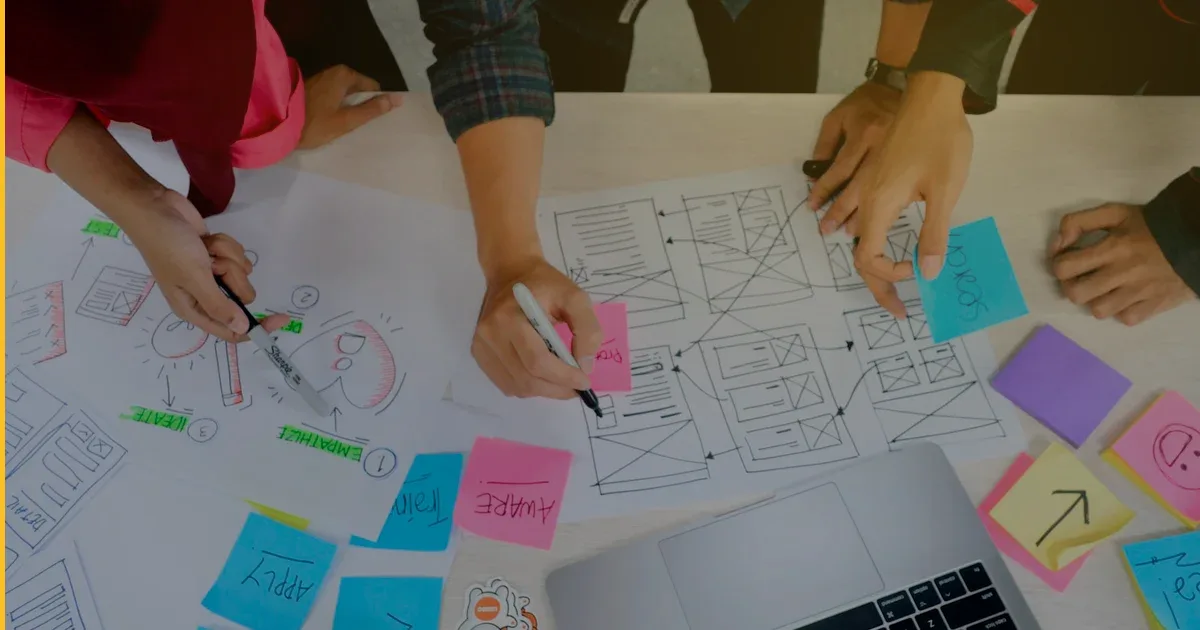
One of the most common — and most expensive — mistakes founders make is hiring a development studio before they’ve answered a simpler question: does this product even need to be built from scratch?
The no-code vs custom app development debate is not a technical one. It is a business one. The right choice depends on where you are in your journey, what you are trying to prove, and what it will cost you to be wrong. This guide gives you a clear decision framework so you can match the tool to the moment — not the other way around.
What “No-Code” Actually Means (and What It Doesn’t)
No-code platforms like Webflow, Bubble, Glide, Adalo, and FlutterFlow let you build functional products without writing code. They have become genuinely capable in recent years. A founder with a clear idea can launch a working web app, a simple iOS app, or an automated workflow in days rather than months.
What no-code does not do:
- Replace custom logic for complex, real-time, or AI-driven features
- Give you full ownership of the underlying architecture
- Scale cost-efficiently once your user base or data volume grows significantly
- Deliver native iOS performance for demanding interactions
No-code is a tool, not a shortcut to avoid the hard questions. Knowing its limits is as important as knowing its strengths.
What Custom Development Actually Costs
Before comparing options, you need honest numbers. Based on current 2026 market rates:
| App Type | Typical Cost Range | Typical Timeline |
|---|---|---|
| Simple MVP (basic CRUD, auth, core screens) | $5,000 – $15,000 | 2 – 4 months |
| Standard product (integrations, notifications, polish) | $15,000 – $45,000 | 4 – 7 months |
| Complex product (AI, real-time, advanced backend) | $45,000 – $120,000+ | 7 – 12+ months |
Hourly rates vary widely by who you hire:
- Large agency: $150 – $250/hr
- Boutique studio (like us at Fera Tech): $60 – $120/hr
- Freelancer: $20 – $60/hr
These are not just cost differences — they reflect very different levels of process, accountability, and quality assurance. Custom development is an investment. The question is whether the moment is right to make it.
The Decision Framework: 5 Questions to Answer First
Before you choose a path, work through these five questions honestly.
1. Have you validated the core idea?
If you have not yet confirmed that real people will pay for this product, you are not ready for custom development. No-code tools exist precisely to help you answer this question cheaply and fast.
A Bubble or Glide prototype can test your core value proposition with real users for a fraction of the cost of a full build. Spend $2,000 proving demand before you spend $40,000 building supply.
2. Is your competitive advantage in the product itself?
If the answer is yes — if the way the product works is the business — then no-code will eventually hold you back. You cannot build a deeply differentiated experience on top of someone else’s constraints.
When we built Launchcast, our space launch tracker, the product had to handle real-time data, complex filtering, and a premium experience that would justify a subscription. No-code could not deliver that. The same applies to Clove AI: the AI-driven kitchen assistant logic required full custom architecture to work well.
If your edge is execution and user experience, custom code is worth it. If your edge is marketing and distribution, no-code may be enough to start.
3. Do you need native iOS performance?
There is a meaningful difference between a web-wrapped app and a true native iOS product. Native apps load faster, feel more responsive, integrate cleanly with the iPhone’s camera, biometrics, and notifications, and earn higher App Store ratings. For consumer-facing products where experience is everything, this gap matters.
No-code tools that target iOS are improving, but they still produce apps that feel like web apps wearing an iOS costume. If your audience will notice the difference — and many will — custom is the right call.
4. Will you need to own or migrate your data?
No-code platforms host your data on their infrastructure. If a platform changes its pricing, shuts down a feature, or goes out of business, your data and your product are at risk. For anything regulated, enterprise-facing, or long-lived, this dependency is a real problem.
Custom development means you own your architecture, your database, and your roadmap.
5. What is your honest runway?
This is the most important question of all. Custom development done badly wastes more money than no-code done cleverly. If your runway is thin, a $40,000 build that takes eight months and misses the mark could end the business. A $3,000 no-code prototype that teaches you what users actually want can save it.
When No-Code is the Right Answer
Use no-code when:
- You are pre-revenue and still validating the problem
- Your product is primarily content, forms, or workflow automation
- You need something live in weeks, not months
- Your users are not power users who will notice rough edges
- You are testing a new market or geography without committing a full budget
No-code is not a lesser choice. It is the correct choice for the validation stage. Many successful products started as no-code experiments before earning the investment that justified a custom rebuild.
When Custom Development is the Right Answer
Choose custom development when:
- You have validated demand and are ready to compete seriously
- Your product requires native iOS features, real-time data, or AI integration
- You are building a subscription business where retention depends on product quality
- You need to own your infrastructure for compliance, security, or scale
- You are raising investment and need a defensible, scalable codebase
This is the stage where working with an experienced studio pays for itself. You can see examples of what this looks like in practice at our work — from consumer iOS apps to AI-integrated products built for clients across the US, Europe, and Central Asia.
The Hybrid Path Most Founders Overlook
You do not always have to choose one or the other. A practical approach that works well:
- Build a no-code or low-code prototype to validate demand and get your first users
- Use real user feedback to sharpen what the product actually needs to be
- Commission a custom build scoped tightly around what you have learned, not what you assumed
This sequence dramatically reduces the risk of a large custom investment. It also gives a development partner like us clearer requirements to work from — which means faster timelines, fewer change requests, and a better outcome for everyone.
Common Questions
Can I start with no-code and migrate to custom later?
Yes, and many products do exactly this. The main cost is that no-code code cannot usually be reused — you are effectively rebuilding. Budget for that if it is part of your plan. The good news is that by migration time, you have real users, real data, and a much clearer product vision to build from.
Will a no-code app get accepted on the App Store?
Generally yes, though Apple has rejected apps that offer little functional value beyond a wrapped website. If you are building something substantive — even on no-code — it should pass review. That said, App Store guidelines evolve, and a no-code app that barely passes today may face issues in future review cycles.
How do I know when I have validated enough to invest in custom development?
A useful signal: paying users who are asking for features your current tool cannot deliver. If you have people spending money and hitting walls, that is the clearest possible case for a custom build.
The Bottom Line
The no-code vs custom app development question is really a sequencing question. No-code is for proving the idea. Custom development is for executing on it. Most failed products that “needed a better app” actually needed better validation first.
If you have done the validation work and you are ready to build something that can compete on product quality — we would be glad to talk through what that looks like for your specific situation. Reach out to our team and let’s figure out the right path together.
Explore more thinking on product strategy at the blog, or see what we have shipped at Fera Tech.
Building something like this?
Fera Tech ships iOS & full-stack apps end-to-end. Tell us about your project.
Start a project