Why Your Industry App Needs iOS First (Not Both at Once)
A data-backed case for the iOS first app strategy for business in premium verticals like healthcare, fitness, and fintech — costs, timelines, and what to build.

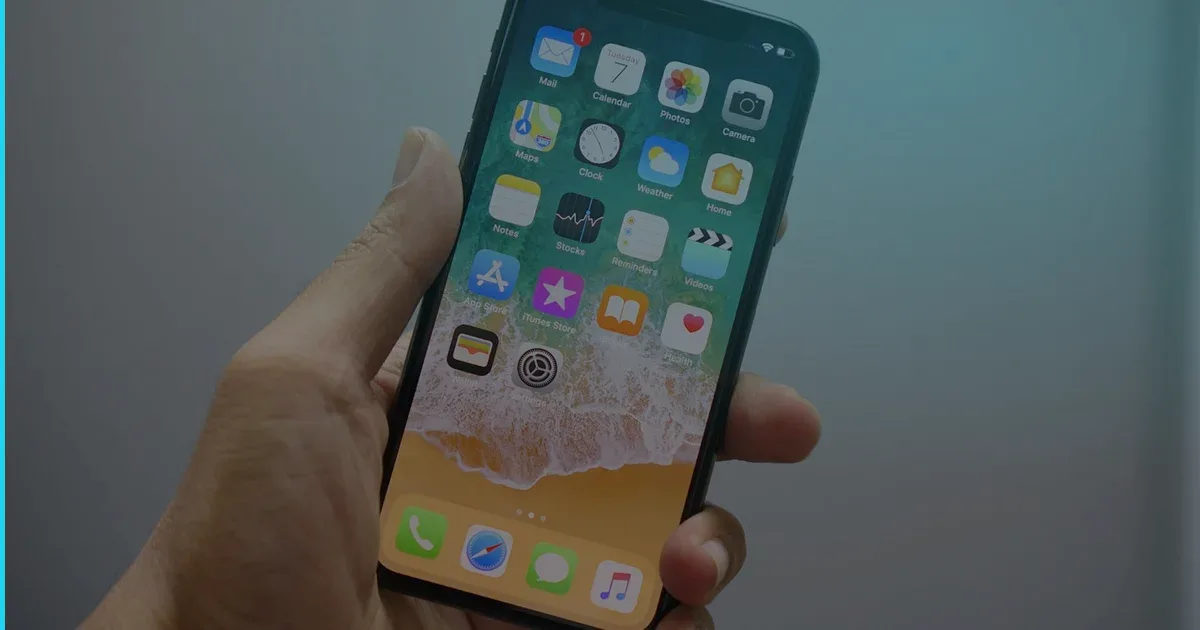
Every founder building a premium mobile product eventually hits the same fork in the road: do we launch on iOS and Android at the same time, or do we pick one and go fast? Most non-technical advisors say “build both — you do not want to miss users.” Most experienced product teams say the opposite. If you are in healthcare, fintech, fitness, or any other premium vertical, the evidence strongly favors an iOS first app strategy for business — and the reasons go well beyond technology.
This post explains why, puts real numbers on the decision, and helps you think through whether a phased launch is right for your product.
The Audience Overlap You Are Probably Ignoring
Here is the uncomfortable truth about “building for everyone”: the people most likely to pay for a premium app, adopt new health or financial tools early, and leave detailed reviews that drive organic growth are disproportionately iPhone users.
This pattern is consistent across premium verticals:
- Fintech and banking apps attract higher-income users who skew toward iPhone. Premium subscription and in-app purchase revenue per user is consistently higher on the App Store than on Google Play.
- Healthcare and wellness apps — especially those sold direct-to-consumer or paired with a physical device — are dominated by iOS. Apple’s HealthKit integrations are more mature and more trusted by users and regulators.
- Fitness apps follow the same line. Wearable adoption (Apple Watch) means your target user almost certainly has an iPhone already.
- Enterprise and B2B tools in North America, Western Europe, and the Gulf lean heavily toward Apple hardware on managed device fleets.
This is not about which platform is “better.” It is about where your specific buyer is most likely to be sitting.
What “Both at Once” Actually Costs
The instinct to launch on both platforms simultaneously comes from a reasonable fear: leaving users behind. But the real cost of a dual launch is rarely calculated in full.
Development budget
| Scope | iOS only | iOS + Android simultaneously |
|---|---|---|
| Simple MVP | $5,000 – $15,000 | $9,000 – $28,000 |
| Standard app | $15,000 – $45,000 | $27,000 – $85,000 |
| Complex (AI / realtime) | $45,000 – $120,000+ | $80,000 – $220,000+ |
Cross-platform frameworks like React Native or Flutter can close that gap somewhat, but they carry trade-offs: weaker platform integrations, slower access to new iOS features, and a different performance profile that matters in healthcare (real-time sensor data) and fintech (biometric auth, secure enclave).
Timeline
A focused iOS build typically ships in 2–4 months for a simple MVP and 4–7 months for a standard product. Adding Android does not just add cost — it adds coordination overhead that typically extends timelines by 30–50% even with a shared codebase.
That extra time compounds: delayed user feedback, delayed revenue, and a longer runway burn before you have data to make product decisions.
Quality and focus
Building for one platform first means your team can go deep — native SwiftUI interfaces that feel right, proper Keychain and Face ID integration, tight HealthKit or StoreKit hooks. When you split attention, you often get two mediocre experiences instead of one excellent one. In premium verticals, mediocre is a brand liability.
The Validation Argument: Why iOS Is the Right Proving Ground
Launching iOS first is not just a cost decision — it is a validation strategy.
Your first release is a learning instrument. You want to know: Does this product solve a real problem? Will users pay for it? What do they use most and what gets ignored? What breaks at scale?
iOS users in premium verticals are more engaged, more vocal with reviews and feedback, and more likely to represent your eventual paying customer. The feedback loop you build on iOS is higher-quality signal than an equivalent Android cohort in most premium categories.
Once you have product-market fit evidence on iOS — retention curves that hold, a subscription renewal rate you can point to, a cohort of users who would be upset if you shut down — you have the data to justify the Android investment. At that point you are building a proven product, not a hypothesis.
Industry by Industry: Where the iOS Advantage Is Clearest
Healthcare and Wellness
iPhone users skew toward higher-income demographics — exactly the segment most likely to pay out-of-pocket for health tools, premium diagnostics, or preventive wellness apps. Apple’s Health framework and wearable ecosystem give iOS a head start in health data depth that Android has not matched.
If you are building a chronic condition tracker, a mental health app, or a remote patient monitoring tool, your earliest clinical users and paying customers are almost certainly on iOS.
Fitness and Performance
The premium fitness market — personal training apps, performance analytics, nutrition coaching — lives on the App Store. High-ticket subscription fitness apps have consistently found their core audience among iPhone users willing to pay $20–50/month for a quality product.
Fintech and Personal Finance
Regulatory compliance for fintech apps is complex enough on one platform. Apple’s security model — Secure Enclave, Face ID, biometric authentication, App Transport Security — makes iOS the default choice for any app handling sensitive financial data. Many institutional partners and enterprise procurement teams also require iOS support as a baseline.
A Phased Launch: What It Looks Like in Practice
If Android is genuinely part of your business case, the right answer is almost never “both at once” — it is a sequenced plan.
- iOS MVP (months 1–4): Build the core experience natively. Focus on the single job your app does better than the competition. Instrument everything: retention, conversion, feature usage, crash-free rate.
- Validate and iterate (months 4–7): Use real user data to make product decisions. Cut features nobody uses. Double down on what drives retention. Get your unit economics right — lifetime value, churn, cost per acquisition.
- Android (months 7–12+): Now you are building a product with a proven playbook. Your Android team can learn from your iOS retention data, copy the UI patterns that work, and launch with confidence rather than guesswork.
This approach is not slower — it is actually faster to real revenue because you are not carrying the weight of two parallel builds while still finding product-market fit. Explore our services to understand how we structure this kind of engagement.
Our Own Apps Follow This Logic
Launchcast, our premium space launch tracker (launchcast.app), launched on iOS first. The audience — enthusiasts who want live launch notifications, countdown widgets, and deep data — skews heavily toward iPhone. We built the product to take full advantage of iOS: Live Activities on the Lock Screen, dynamic widgets, Apple Watch support. An Android version would have been a shadow of that experience at launch.
Clove AI, our AI smart-kitchen assistant (clove-app.com), is another iOS-first product. The integration with Apple’s photo library, voice input, and on-device processing all made iOS the natural starting point. The product works with the platform, not against it.
Both products reflect the same pattern we see across our client work — when you build for the platform instead of trying to abstract it away, the product is better and reaches paying users faster.
When “iOS First” Becomes “iOS Only” (And That Is Fine)
For some products, iOS never needs an Android companion. If your target user is an enterprise professional on a managed Apple device, a healthcare patient whose provider uses iPad-based clinical tools, or a consumer in North America or Western Europe with a subscription budget above $15/month — Android may represent 10–20% of your addressable market.
Serving that tail before you have nailed your core product and business model is a distraction, not a growth lever. Some of the most successful apps in the App Store today are iOS-only by design, not by neglect.
Common Questions
Q: What if my target market is in a region where Android dominates, like Southeast Asia or Latin America?
In those markets Android has significantly higher device share, so the calculus changes. However, for premium-priced apps — subscription or high one-time IAP — iOS users still represent a disproportionate share of revenue even in Android-dominant markets. The right answer depends on your price point and target customer segment, not just raw device share.
Q: Can a cross-platform framework like Flutter give us the best of both worlds?
Sometimes. For straightforward apps, cross-platform frameworks deliver real time and cost savings. But in premium verticals — where you need deep HealthKit access, on-device AI (Core ML), or tight biometric authentication — native iOS development produces a measurably better result. We evaluate this case by case. See the blog for a deeper look at when cross-platform makes sense.
Q: How much does it cost to add Android after a successful iOS launch?
Typically 40–70% of the original iOS build cost, depending on how different the Android UX needs to be and whether you are rebuilding natively or using a cross-platform layer. A $25k iOS app generally costs $12–18k to extend to Android once the product is validated — and at that point you are funding it from early revenue, not from limited initial runway.
The Bottom Line
An iOS first app strategy for business is not about ignoring Android users. It is about respecting your budget, your timeline, and the reality of where your paying customers actually are. For healthcare, fintech, fitness, and enterprise, that is overwhelmingly iOS. Build the best possible product for that audience first. Validate it. Then expand from a position of strength.
If you are weighing this decision for your own product, we are glad to talk it through. Get in touch with the studio — we can help you map out a launch strategy that fits your market, your budget, and your goals.
Building something like this?
Fera Tech ships iOS & full-stack apps end-to-end. Tell us about your project.
Start a project