AI Powered Telegram Bot: Give Your Bot a Real Brain
Learn how an AI powered Telegram bot understands free text, answers like a human, and closes sales — with real Uzbekistan pricing and examples.

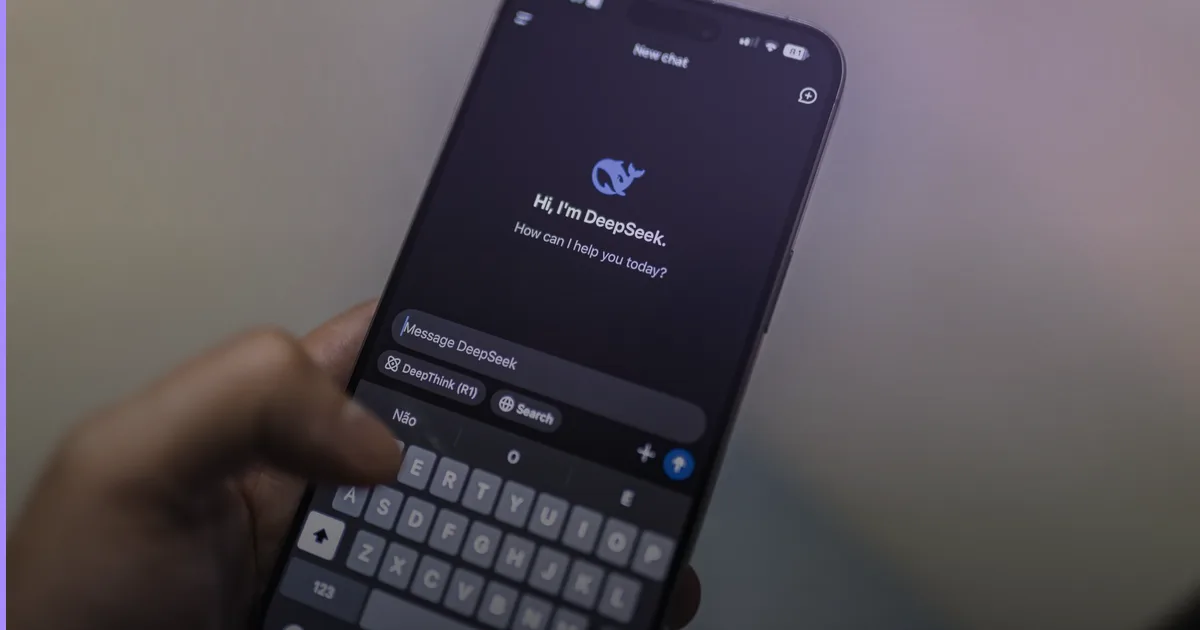
If your Telegram bot only understands /start and a handful of button menus, your customers already know its limits — and they hit them within thirty seconds. They type a normal question in their own words, the bot replies with a generic fallback, and they either give up or call you directly, defeating the whole point of automation.
An AI powered Telegram bot fixes exactly this. Instead of rigid menu trees, it uses a language model to understand free-form messages in Uzbek, Russian, or English, pull the right answer from your product data, and hand off to a human only when it genuinely should. This post explains what “a real brain” actually means technically, what it costs in Uzbekistan in 2026, and how to decide if your business needs it yet.
What Makes a Telegram Bot “AI Powered” (and What Doesn’t)
Most bots on the market are still decision trees: press 1 for catalogue, press 2 for delivery, press 3 for a human. That’s fine for simple order-taking, but it breaks the moment a customer asks something that wasn’t anticipated — “do you deliver to Chilanzar on Sunday?” or “is this jacket true to size?”.
An AI powered bot adds a language model (like GPT-family or open models) on top of your existing flow. Three components typically work together:
- Natural language understanding — the bot reads what the customer actually typed, not just button taps.
- Retrieval over your own data — the model answers using your price list, FAQ, order history, or CRM notes, not generic internet knowledge.
- Controlled handoff — when confidence is low or the customer explicitly asks for a person, the conversation routes to a live agent inside amoCRM or Bitrix24 without losing context.
That combination is what separates a genuinely useful assistant from a bot that “sounds smart” but hallucinates prices.
Why This Matters More in Uzbekistan Than Almost Anywhere Else
Telegram isn’t just popular here — it’s close to the whole internet. With roughly 27 million users and about 95% reach among people online, a Tashkent retailer’s real “app” is often their Telegram bot, not a native iOS or Android app. WhatsApp and Viber play a minor role by comparison.
That scale means the volume of repetitive questions — “ish vaqti qachon”, “yetkazib berish qancha turadi”, “to’lov qanday amalga oshiriladi” — is genuinely large for any business doing meaningful traffic. Market patterns across Tashkent food-delivery and online-retail bots suggest Telegram already drives 40%+ of monthly turnover for many of these businesses; an AI layer is what keeps that channel from becoming a support bottleneck as volume grows.
There’s also a language reality worth naming directly: Uzbek businesses serve customers who write in Uzbek, Russian, and sometimes English, often switching mid-conversation. A rule-based bot needs separate menu trees per language. A modern AI layer handles code-switching naturally, which matters when you’re trying to close a sale, not just answer FAQs.
Where AI Actually Helps vs Where a Simple Bot Is Enough
Not every bot needs a brain. Here’s a practical way to decide:
| Situation | Simple bot (buttons/menus) | AI powered bot |
|---|---|---|
| Fixed catalogue, few SKUs, low message volume | Good fit | Overkill |
| Customers ask open-ended questions (“what’s warmer, this or that jacket?”) | Frustrating | Good fit |
| You want the bot to also qualify leads and push them into a CRM pipeline | Limited | Good fit |
| Order + payment flow only (Payme/Click), no real conversation | Good fit | Overkill |
| Support volume growing faster than your team | Breaks down | Good fit |
| Multilingual customers switching between Uzbek/Russian mid-chat | Clunky | Good fit |
If you’re still deciding between the two approaches for your business, our guide on choosing a Telegram bot for business in Uzbekistan walks through the full decision in more depth, and Telegram bot vs a website is useful if you haven’t settled that question yet either.
How an AI Layer Actually Gets Built
A production-grade AI powered bot is not “plug ChatGPT into Telegram” — that alone hallucinates and leaks irrelevant answers. A properly built one has structure:
- Define the bot’s knowledge base: product catalogue, pricing, policies, FAQ — kept in a format the model can search (a vector database or structured documents).
- Set clear boundaries: what the bot may answer directly, what it must confirm before acting (like placing an order), and what always goes to a human.
- Wire it to your CRM (amoCRM or Bitrix24 are the common choices locally) so conversations become leads, not dead-end chats.
- Add payment handling for Payme, Click, or Uzum Bank if the bot should close the sale itself, not just answer questions.
- Test with real customer message logs, not hypothetical questions — actual Uzbek/Russian phrasing surfaces gaps fast.
- Set up monitoring so you see which questions the bot fails on, and improve the knowledge base over time.
This is meaningfully more engineering than a menu bot, but it’s still a focused project — weeks, not months, for most businesses.
What It Costs in Uzbekistan (Real Ranges)
Pricing depends heavily on scope. As a rough guide for 2026:
- A simple, button-based Telegram bot: 500 000–1 500 000 so’m.
- An ordering and payment bot (Payme/Click integration, no AI): 1 500 000–5 000 000 so’m.
- A CRM-connected AI agent bot with natural language understanding: from 5 000 000 so’m, scaling with catalogue size and CRM complexity.
- Ongoing support and model tuning: typically from ~$50/month, since answer quality needs occasional review as your catalogue changes.
If you want a fuller breakdown of what drives cost up or down, see how much a Telegram bot costs in Uzbekistan in 2026. If your immediate need is just taking orders and getting paid reliably, our step-by-step guide on building a Telegram bot for orders and payments is the more direct starting point.
The Business Case, Honestly
Numbers circulating in the local market give a rough sense of scale, not a guarantee: CRM adoption is associated with roughly 30% higher sales conversion, AI assistance can make sales staff around 40% more efficient at handling inbound volume, and voice AI in call-centre contexts has cut costs by as much as 5x in some deployments. Automation broadly removes a large share — often cited around 80% — of routine manual replies.
Treat these as directional patterns, not promises for your specific business. The actual gain depends on your message volume, catalogue complexity, and how disciplined the handoff to humans is. A bot that answers confidently but wrongly is worse than a slower human — accuracy has to come before ambition.
There’s also a policy tailwind worth knowing: Uzbekistan’s 2024 presidential decree and the resulting AI Strategy 2030 put over $50M into AI infrastructure, expanded IT Park’s tax incentives to 2000+ resident companies, and set a target of training 1 million AI specialists — with fintech, retail, and logistics named as priority sectors. None of that guarantees results for any one bot, but it does mean the tooling, talent, and infrastructure for this kind of project are maturing quickly and locally.
Frequently Asked Questions
Does an AI bot replace my support team? No — well-built ones reduce repetitive load and route complex or sensitive cases to a human, ideally through your CRM so nothing gets lost.
Can it work in Uzbek and Russian at the same time? Yes, modern language models handle both well, including mid-conversation switching, which is common among local customers.
Will it hallucinate prices or promises? Only if built poorly. A properly scoped bot answers from your actual catalogue and policies, not open-ended internet knowledge — that grounding is the difference between a useful tool and a liability.
How long does a project like this take? For most Uzbekistan SMEs, a focused MVP — knowledge base, CRM connection, and testing — takes a small number of weeks, not months.
Where This Fits With the Rest of Your Stack
An AI powered Telegram bot rarely lives alone — it usually sits alongside a CRM, a payment integration, and sometimes a website or app. See our services for how we scope these builds end to end, or browse recent work for examples of the systems around a bot like this.
If you’re weighing whether your business is ready for an AI layer or just want a straight answer on scope and cost, get in touch and we’ll walk through it together.
Building something like this?
Fera Tech ships iOS & full-stack apps end-to-end. Tell us about your project.
Start a project