Telegram Bot CRM for Restaurants and Cafes in Uzbekistan
How Tashkent restaurants use a Telegram bot CRM for restaurants and cafes to get more orders and cut manual admin — pricing, tools, and a rollout plan.

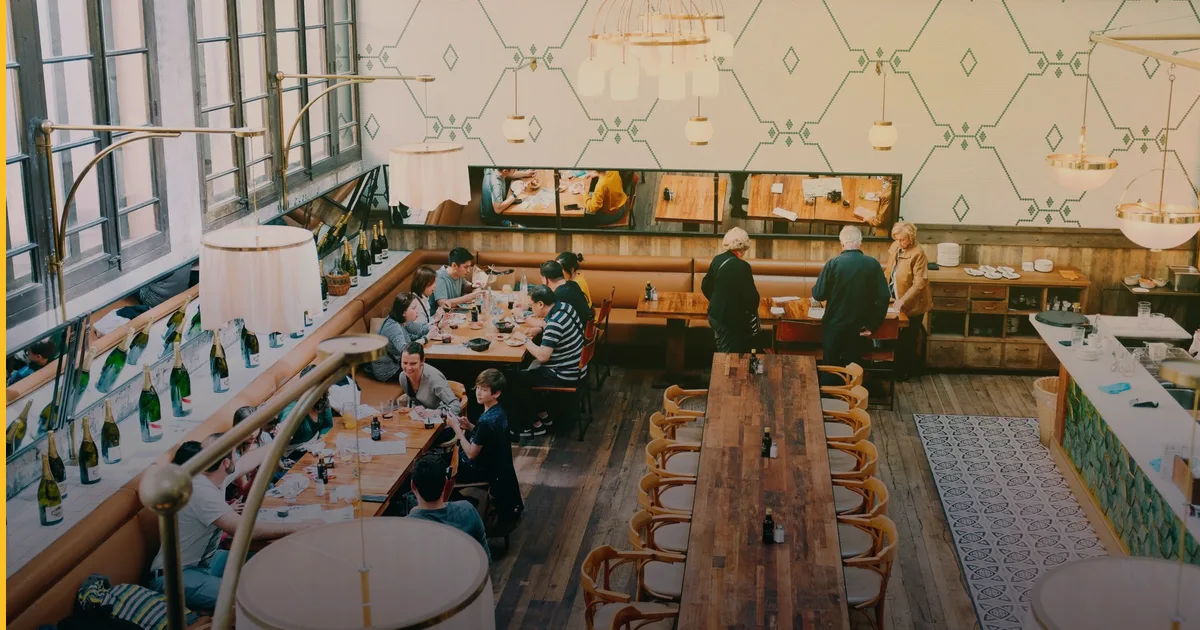
If you run a restaurant or cafe in Tashkent, your phone probably never stops. Orders come in on a personal Telegram account, a waiter scribbles a reservation on paper, and by the time the evening rush hits, nobody remembers who promised a table for eight. A well-built Telegram bot CRM for restaurants and cafes fixes exactly this: it takes orders, tracks guests, and pushes repeat customers back through the door, without adding another app nobody wants to download.
This isn’t a theoretical upgrade. Telegram already reaches roughly 95% of internet users in Uzbekistan, so your customers are already there — the only question is whether your restaurant is answering them with a person juggling five chats at once, or with a system that never drops an order.
Why Restaurants in Uzbekistan Are Moving to Telegram Bots
Menus printed as PDFs and shared over Instagram DMs don’t scale past a handful of tables a night. A Telegram ordering bot changes the mechanics of the business:
- Customers browse the menu, order, and pay inside the chat they already use daily.
- Every order lands in one place instead of scattered across staff phones.
- Repeat customers can be re-engaged with a broadcast — “kelgusi hafta yangi taom” — instead of hoping they remember you.
Market patterns across Tashkent’s food-delivery and QSR operators show Telegram bots often driving 40%+ of monthly turnover once adoption sticks, because ordering friction drops to almost zero. That number will vary by concept and location, but the direction is consistent: less friction, more repeat orders.
What the Bot Actually Does Day to Day
A restaurant bot built well typically handles:
- Digital menu with categories, photos, and modifiers (spice level, size, extras)
- Cart, delivery address or table number, and order confirmation
- Payment via Payme or Click inside the chat, or cash-on-delivery toggle
- Order status updates pushed to the customer automatically
- A simple loyalty mechanic (points, a punch-card equivalent, or a returning-customer discount)
Where CRM Fits In
The bot captures the order; the CRM is where you turn one-time diners into regulars. Most Uzbek restaurant groups we see succeeding pair the bot with amoCRM (the dominant choice locally) or Bitrix24, sometimes with IOTA.uz for simpler setups. The CRM gives you:
- A record of every customer: order history, favourite dishes, average check
- Segments for re-marketing — “hasn’t ordered in 30 days,” “orders every Friday”
- A pipeline for catering or event bookings, which otherwise live in someone’s head
- Staff accountability — who confirmed which order, how fast
Restaurants that add a real CRM layer on top of ad-hoc chat ordering typically see sales lift in the ~30% range as follow-up and retention stop being accidental. Pair that with kitchen-side tools like 1C or MoySklad for inventory, and the whole loop — menu, order, payment, stock, repeat visit — sits in systems instead of memory.
Build vs Off-the-Shelf: A Quick Comparison
| Approach | Typical cost | Good for | Limitation |
|---|---|---|---|
| Free bot builders (templates) | 0 – 500,000 so’m | Testing an idea, single-location cafes | Weak payments, no CRM sync, hard to scale |
| Custom ordering bot + payment | 1,500,000 – 5,000,000 so’m | Most restaurants ready to grow | One-time build, needs a CRM to fully pay off |
| Custom bot + CRM/AI-agent integration | 5,000,000+ so’m | Multi-location groups, delivery-heavy concepts | Higher upfront cost, biggest long-term ROI |
Ongoing support and small updates after launch typically run from about $50/month. Treat these as ranges, not quotes — final pricing depends on menu complexity, number of locations, and how deep the CRM integration goes.
A Realistic Rollout Plan
Restaurants that succeed with this don’t try to automate everything on day one. A workable sequence:
- Digitise the menu and confirm categories/modifiers with the kitchen
- Launch the ordering bot with Payme/Click payment and cash fallback
- Connect orders to a CRM (amoCRM or Bitrix24) so every customer has a profile
- Add a simple loyalty or repeat-order incentive
- Layer in inventory sync (1C/MoySklad) once order volume justifies it
- Add an AI layer for FAQs, reservation confirmations, or upsell suggestions
Most focused MVPs like this ship in weeks, not months, when scoped tightly to ordering + CRM first.
Where AI Fits Naturally
Once the bot and CRM are live, an AI layer on top typically handles repetitive questions (“do you have a vegan option,” “are you open on Sundays”) and can suggest upsells based on order history — a small nudge that adds up across hundreds of daily conversations. If you want the fuller picture of how automation applies specifically to restaurants in this market, our guide on AI automation for restaurants in Uzbekistan covers kitchen-side and staffing angles this post doesn’t. Retail businesses face a similar decision, covered in Telegram bot and CRM for retail shops.
For the mechanics of building the bot itself — menus, payments, broadcast messaging — see our complete guide to Telegram bots for business in Uzbekistan. And if you’re still deciding between CRM platforms, our amoCRM vs Bitrix24 comparison walks through the trade-offs in detail.
Frequently Asked Questions
Do I need a CRM if I already have a Telegram ordering bot? Not immediately, but you’re leaving revenue on the table. The bot captures orders; the CRM is what turns a one-time customer into a repeat one through history, segments, and follow-up.
Which payment system should the bot support? Payme and Click together cover the large majority of digital payments in Uzbekistan, with Uzum Bank growing fast. Supporting both, plus a cash-on-delivery toggle, covers nearly every customer.
How long does a project like this take? A focused ordering bot with payment typically launches in a few weeks. Adding full CRM integration and inventory sync extends the timeline but is usually still measured in weeks, not months.
Can the bot and CRM work in both Uzbek and Russian? Yes — this is standard practice now. Customers should be served in whichever language they write in, and a well-built bot handles both without extra manual translation work.
This kind of setup is the same pattern behind Uzbekistan’s broader AI and automation shift in 2026 — restaurants are simply one of the fastest-moving verticals. If you’re weighing whether this fits your restaurant or cafe, take a look at our services and recent work, or just get in touch and we’ll scope it against your menu and order volume — contact us.
Building something like this?
Fera Tech ships iOS & full-stack apps end-to-end. Tell us about your project.
Start a project