AI Automation for Dental Clinics in Uzbekistan
AI automation for dental clinics Uzbekistan: Telegram booking bots, CRM, and AI agents that fill chairs and cut no-shows.

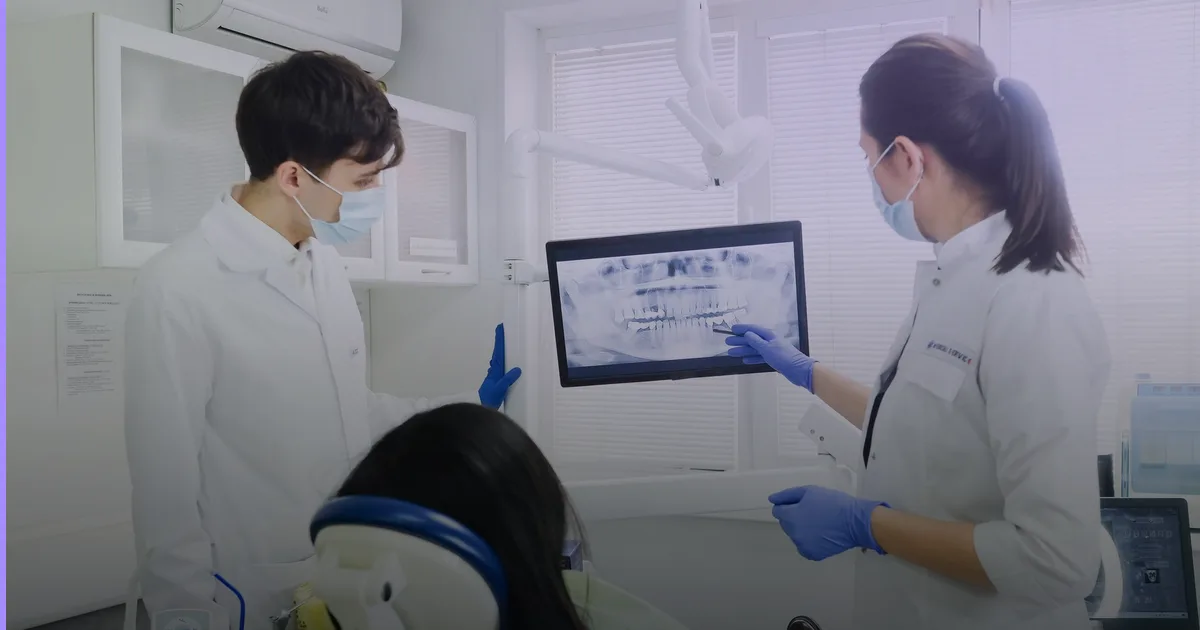
If you run a dental clinic in Tashkent or Samarkand, your front desk is probably the most expensive bottleneck in the business. A receptionist juggles incoming calls, a paper or Excel schedule, patients messaging on Telegram to ask about prices, and reminder calls that still don’t stop half the chairs from sitting empty. AI automation for dental clinics in Uzbekistan solves this specific problem: it turns booking, reminders, and payment collection into something that runs itself, so your hygienists and dentists spend their day treating patients instead of chasing them.
This guide is written for clinic owners and practice managers, not developers. It covers what actually works locally, what it costs in so’m, and how to avoid overbuilding.
Why dental clinics lose money at the front desk, not the chair
Most dental practices in Uzbekistan don’t have a demand problem — they have a scheduling and follow-up problem. Common leaks:
- Patients call during treatment hours and nobody picks up, so they book with a competitor instead.
- No-shows and late cancellations leave chairs empty with no time to fill them.
- Treatment plans (implants, orthodontics, whitening) get quoted once and never followed up on.
- Payment collection for multi-visit treatment plans is manual and easy to lose track of.
Each of these is a workflow problem, and workflow problems are exactly what automation is built to fix — before you spend money on more marketing to fill a leaky funnel.
Why Telegram is the right channel, not a clinic app
Uzbekistan is a Telegram-first market: roughly 27 million users, about 76% of internet users, with close to 95% reach. Building a standalone app for a single clinic rarely pays off — patients won’t download and keep an app for a service they use a few times a year. A Telegram bot meets patients where they already are.
A well-built dental Telegram bot can:
- Show available appointment slots and let patients book without calling
- Send automatic reminders 24 hours and 2 hours before an appointment (this alone typically cuts no-shows meaningfully)
- Answer common questions (price ranges, working hours, address, insurance) instantly, in Uzbek or Russian
- Collect deposits or payments via Payme, Click, or Uzum Bank directly in the chat
- Notify patients automatically when it’s time for a cleaning or a follow-up visit
What a real system looks like: CRM plus bot plus AI agent
A Telegram bot alone is useful, but the bigger win comes from connecting it to a CRM so nothing falls through the cracks. Clinics that already run on amoCRM or Bitrix24 typically wire the bot straight into it: every new lead, booking, and treatment-plan follow-up becomes a card that a manager can see and, more importantly, that an automated reminder sequence can act on without a human remembering to.
On top of that, an AI agent can handle the layer a receptionist doesn’t have time for:
- Answering after-hours questions on the clinic’s Telegram channel or website chat
- Qualifying leads (“Is this for a check-up or a specific procedure?”) before they reach a human
- Following up automatically on quoted treatment plans that a patient hasn’t confirmed yet
- Handling the same conversation naturally in Uzbek and Russian, since most clinics serve both language groups
This is the same pattern behind broader AI agents for business in Uzbekistan, applied specifically to a scheduling-heavy, appointment-based practice.
A typical rollout, illustrative only
In a clinic-shaped project like this, you’d typically expect the bot plus reminder automation to noticeably reduce no-shows within the first month, since most no-shows come from forgetting rather than deliberate cancellation. Market patterns across Tashkent service businesses show CRM adoption lifting booked-and-completed appointments by roughly 30%, and automation removing up to 80% of the routine manual work around scheduling and follow-up. Treat these as expectations to test against your own numbers, not guarantees.
What it costs in so’m
Pricing depends on scope, but real market bands for this kind of project look like this:
| System | What it does | Typical cost (so’m) |
|---|---|---|
| Simple Telegram booking bot | Slot booking, reminders, FAQ | 500 000 – 1 500 000 |
| Booking + payment bot | Above, plus Payme/Click/Uzum deposits | 1 500 000 – 5 000 000 |
| CRM + AI-agent system | Full CRM integration, AI qualification, follow-ups in Uzbek/Russian | from 5 000 000 |
| Ongoing support & updates | Monitoring, small changes, new flows | from ~$50/month |
A focused MVP — booking bot plus reminders — is usually a matter of weeks, not months. Start there, prove the value, then expand into CRM and AI-agent features once the basics are running.
Checklist: is your clinic ready for this?
- Your front desk regularly misses calls or double-books slots
- No-shows or late cancellations are a recurring cost
- Patients already message you on Telegram asking about prices or availability
- Treatment-plan follow-ups depend on someone remembering to call back
- You want to serve patients in both Uzbek and Russian without hiring more staff
If you checked two or more, a booking bot with CRM behind it will likely pay for itself quickly — the same logic that applies to Telegram bot and CRM for restaurants and to AI automation for retail shops in Uzbekistan holds here: the highest-leverage automation is the one that removes the manual step your team repeats every single day.
The policy backdrop, briefly
This isn’t happening in a vacuum. Uzbekistan’s October 2024 presidential decree and the AI Strategy 2030 put over $50M into AI infrastructure, IT Park now hosts 2000+ resident companies with tax incentives, and healthcare is explicitly named as one of the priority sectors for AI adoption. Clinics that automate now aren’t chasing a trend — they’re aligned with where the market and the regulatory environment are both heading. For the fuller picture, see our overview of AI and business automation in Uzbekistan in 2026.
Frequently Asked Questions
Do patients actually use a Telegram bot instead of calling? Yes, particularly younger and working-age patients who already use Telegram daily for everything else. Keeping a phone line open for patients who prefer to call is still worth it — the bot handles volume, not every single case.
Can the bot and AI agent really work in Uzbek and Russian? Yes. Modern AI language handling covers both well, and clinics serving a mixed-language patient base typically configure the bot to detect and respond in whichever language the patient writes in.
Will this replace our receptionist? No, and it shouldn’t try to. It removes the repetitive parts — booking, reminders, FAQ, basic qualification — so your receptionist can focus on patients who need a real conversation.
How fast can we launch something basic? A simple booking-and-reminder bot is typically weeks, not months, to launch. CRM and AI-agent layers are added afterward once the core bot is proven.
Fera Tech builds this kind of system end to end — Telegram bot, CRM integration, and AI agent — for clinics across Uzbekistan. Have a look at our services and recent work, then get in touch to talk through what a system like this would look like for your clinic.
Building something like this?
Fera Tech ships iOS & full-stack apps end-to-end. Tell us about your project.
Start a project