AI Automation for Retail Shops in Uzbekistan: A Practical Guide
How Uzbekistan retail shops use AI automation for retail shops Uzbekistan to cut manual work, sell more on Telegram, and take Payme/Click payments.

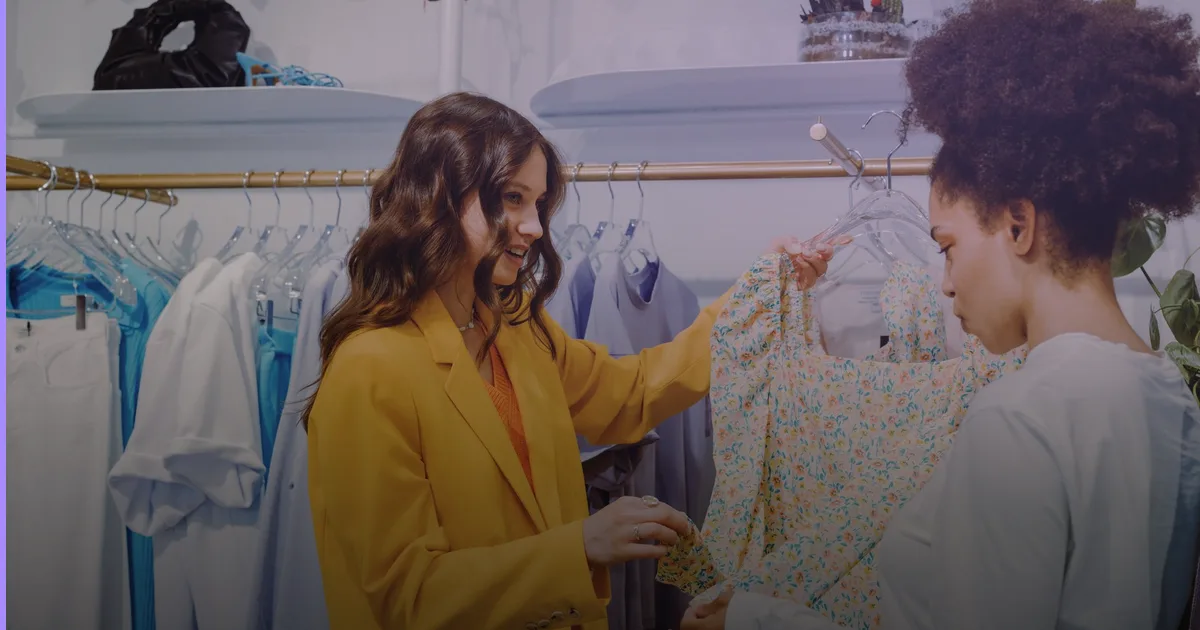
If you run a retail shop in Tashkent, Samarkand, or anywhere across Uzbekistan, you already know the pain: a phone that never stops buzzing with the same questions about stock and price, a cashier who doubles as a customer-support agent, and inventory counts that never quite match what’s on the shelf. AI automation for retail shops Uzbekistan is no longer a big-city luxury reserved for supermarket chains — it’s a practical, affordable way for a single-location shop or a small chain to answer customers instantly, take payments without friction, and stop losing sales to slow replies.
This guide walks through what actually works for Uzbek retailers in 2026: which channels to automate first, what a realistic budget looks like in so’m, and how AI, Telegram, and local payment rails fit together without you needing an engineering team on staff.
Why retail shops in Uzbekistan are automating now
Three things changed the calculation for local retailers. First, the government’s push around the AI Strategy 2030 — following the October 2024 presidential decree — brought tax perks through IT Park and real investment into AI infrastructure, which lowered the cost of building and running automation locally. Second, customer expectations shifted: shoppers now expect an instant reply on Telegram, not a callback tomorrow. Third, AI tools got good enough at Uzbek and Russian that a bot can actually hold a useful conversation with a customer in either language, which matters enormously in a bilingual market.
The result: retailers who automate the repetitive 80% of their customer interactions — “is this in stock,” “what’s the price,” “where are you located,” “can I pay by card” — free up staff for the 20% that actually needs a human: resolving a complaint, closing a bigger sale, handling a return.
The Telegram advantage
With roughly 27 million users and about 76% of the country’s internet population on Telegram, it is the default channel for Uzbek shoppers — not WhatsApp, not Viber, not a website contact form. A retail shop that isn’t reachable on Telegram is invisible to a large share of its potential customers. That’s why almost every automation project for a local shop starts with a Telegram bot, not an app.
What can actually be automated in a retail shop
Customer questions and product catalog
An AI-powered Telegram bot can answer “do you have this in size 42” or “what’s the price in so’m” instantly, pull from a live product catalog, and hand off to a human only when the question is genuinely complex. For shops running a broader storefront and CRM setup — the kind covered in Telegram bot and CRM for retail shops — this catalog logic connects directly to inventory, so stock answers stay accurate without manual updates.
Orders and payments
Once a customer decides to buy, the bot should be able to take the order and the payment in the same chat. Local libraries such as PayTechUZ make it straightforward to wire up Payme (the most-used option, with 10M+ users), Click (the second most popular), and the fast-growing Uzum Bank, alongside card rails like UzCard and Humo. A shop that adds a working payment flow to its Telegram bot typically sees a meaningful share of monthly turnover move through that channel — in many Tashkent food-delivery and online retail businesses, Telegram-driven ordering accounts for 40%+ of monthly turnover, a pattern worth aiming for even if your shop is physical-first.
CRM and follow-up
Manually tracking who asked about what, who abandoned a cart, and who hasn’t ordered in a month doesn’t scale past a handful of customers. Connecting your Telegram bot to a CRM like amoCRM (the dominant choice locally) or Bitrix24 lets every conversation become a lead record automatically. Businesses that formalize this loop commonly report sales lifts around 30%, simply because no interested customer falls through the cracks.
Inventory and back-office sync
For shops already using 1C or MoySklad for inventory and accounting, automation can sync stock levels between the back office and the Telegram storefront, so the bot never promises something that isn’t on the shelf. This is the difference between a bot that looks smart and one that actually is.
A simple automation framework
- Map your top 10 recurring customer questions and let AI handle them first
- Stand up a Telegram bot as your primary channel — not a website chat widget
- Connect at least one local payment method (Payme or Click) for direct ordering
- Route every conversation into a CRM (amoCRM or Bitrix24) automatically
- Sync inventory from 1C/MoySklad so stock answers are always accurate
- Add a human hand-off rule for complaints, returns, and high-value orders
- Review bot conversation logs monthly to close gaps in answers
What it costs in so’m
| Automation level | Typical range (so’m) | Best fit |
|---|---|---|
| Simple Telegram bot (FAQ, catalog, hours/location) | 500,000 – 1,500,000 | Single shop, low order volume |
| Ordering + payment bot (Payme/Click integrated) | 1,500,000 – 5,000,000 | Shop with online orders or delivery |
| CRM-connected AI agent (amoCRM/Bitrix24 sync) | 5,000,000+ | Multi-staff shop or small chain |
| Ongoing support & updates | from ~$50/month | Any shop post-launch |
These are ranges, not fixed quotes — actual cost depends on catalog size, payment complexity, and how deep the CRM integration goes. A focused MVP is typically a matter of weeks, not months, when scoped well.
Is it worth it for a small shop, not just a chain?
Yes, if the automation targets a real bottleneck. A single-location shop with one or two staff often benefits most from removing repetitive questions and taking payment automatically — that’s the highest-leverage first step, well before investing in a full CRM. Chains and multi-location retailers get more value from the CRM and inventory-sync layers, since coordination cost grows faster than headcount. Either way, automation is reported to remove around 80% of routine manual work once it’s properly scoped — the key word being “properly,” since a bot bolted on without a clear customer journey helps very little.
If you’re weighing retail against other verticals, it’s worth comparing notes with how restaurants approach the same problem — see AI automation for restaurants in Uzbekistan and Telegram bot and CRM for restaurants for parallel patterns in ordering and CRM. For the bigger picture on where the market is heading, our state-of-market overview for AI and automation in Uzbekistan and the complete guide to AI agents for business are good next reads, alongside our complete guide to Telegram bots for business.
Frequently Asked Questions
Does my shop need a website before automating with AI? No. Most Uzbek shoppers never visit a website — they message on Telegram. A bot-first approach usually reaches more customers faster than a website ever will, though a simple site can still help with search visibility.
Which payment method should I integrate first? Start with Payme, since it has the largest user base in Uzbekistan, then add Click. Most retailers eventually support both, since customers have strong individual preferences.
Can the bot really speak good Uzbek and Russian? Modern AI handles both languages well enough for typical retail conversations — product questions, pricing, order status — and can switch automatically based on how the customer writes to it.
How long before I see results? Simple Telegram bots can launch within a couple of weeks. The bigger driver of results isn’t launch speed but whether the bot actually solves a bottleneck customers hit today — catalog accuracy and payment friction matter more than extra features.
Ready to automate your shop?
Every retail shop is different — different catalog size, different payment mix, different staff structure. If you want a straightforward assessment of where automation would help most in your shop, take a look at our services and recent work, then get in touch and we’ll walk through what a focused first step would look like for you.
Building something like this?
Fera Tech ships iOS & full-stack apps end-to-end. Tell us about your project.
Start a project