AI Automation for Agribusiness and Farms in Uzbekistan
AI automation for agribusiness and farms in Uzbekistan: Telegram ordering bots, CRM, and AI agents for cotton, fruit, and cattle operations.

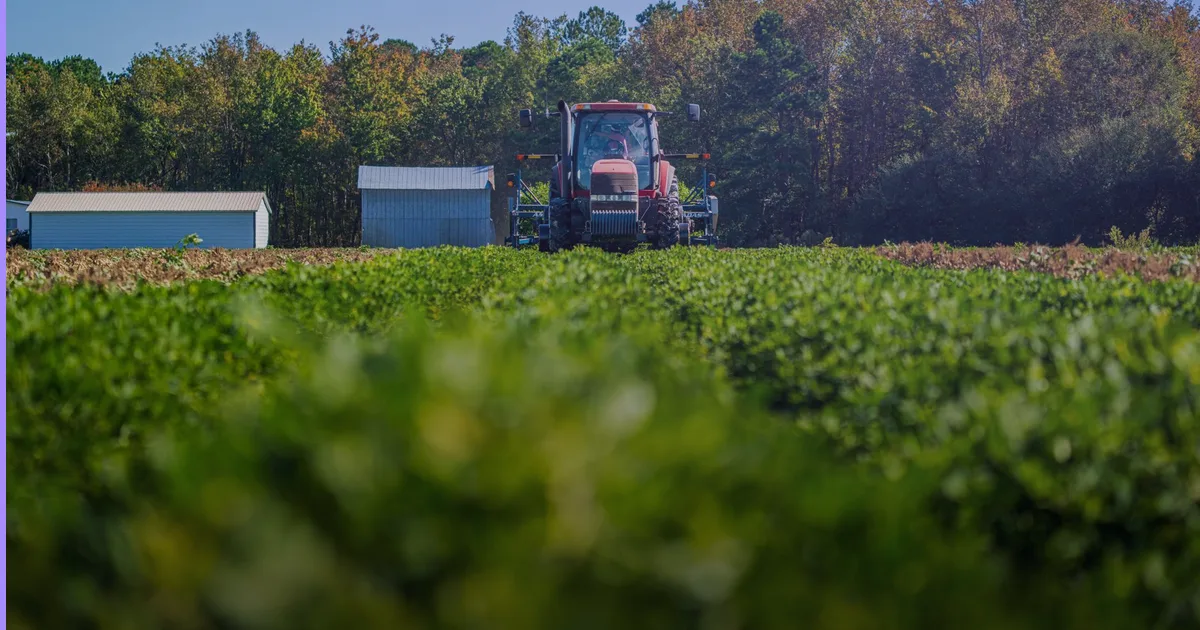
If you run a farm, a cotton or fruit export business, or an agro-processing plant anywhere from the Fergana Valley to Samarkand, your biggest losses rarely come from the field itself — they come from paperwork, missed orders, and a warehouse manager who tracks stock in a notebook. AI automation for agribusiness and farms in Uzbekistan is starting to close that gap, not by replacing agronomists with robots, but by fixing the everyday admin that eats margin: order intake, buyer communication, inventory across warehouses, and payment collection.
This guide covers what’s actually working for agricultural businesses here — the channels buyers already use, realistic prices in so’m, and where AI adds real value versus where it’s just a buzzword.
Why agribusiness in Uzbekistan is a strong fit for automation
Agriculture is explicitly one of the priority sectors named in the government’s AI Strategy 2030, backed by the October 2024 presidential decree and $50M+ in AI infrastructure spending. That tailwind matters less for the subsidies and more for what it signals: the ecosystem (IT Park, tax-free AI zones, local developers) now exists to build and support this kind of tooling affordably.
Practically, agribusinesses face a specific mix of problems that automation solves well:
- Buyers (distributors, exporters, retail chains) ordering by phone call or WhatsApp message, with details lost in the noise
- Seasonal cash-flow crunches worsened by slow manual invoicing and payment tracking
- Multiple warehouses or storage points with no shared view of stock levels
- Field staff and drivers who need simple tools, not a complex ERP they’ll never open
Telegram bots as the buyer-facing front door
Uzbekistan is a Telegram-first market — around 27 million users, roughly 76% of internet users, with reach near 95%. For an agribusiness selling cotton fiber, dried fruit, tomato paste, or livestock feed to wholesale buyers, a Telegram bot is a far more realistic entry point than a website or app nobody will install.
A well-built ordering bot can:
- Show current stock and price lists per product, updated by your team in real time
- Let a buyer place and confirm an order without a phone call
- Accept payment or a deposit through Payme, Click, or Uzum Bank inside the chat
- Send automatic status updates on dispatch and delivery
- Route bulk B2B inquiries to a salesperson only when the deal needs a human touch
This mirrors what’s already working in adjacent sectors — see how a similar approach plays out for Telegram bots and CRM for restaurants and for retail shops in Uzbekistan. The pattern repeats: whichever business gets easiest to order from by chat wins the repeat buyer.
Where an AI agent adds value on top
A plain ordering bot is just a digital order form. An AI layer earns its keep when it:
- Answers buyer questions in natural Uzbek or Russian — moisture content, packaging, minimum order quantity — without a human on standby
- Flags anomalies, like a sudden large order right before harvest season, for manager review
- Summarises daily order volume and outstanding payments into a short morning report
- Handles routine supplier and driver coordination messages so your office staff isn’t a human switchboard
CRM and inventory: connecting the field to the office
Order-taking is only half the picture. Agribusinesses that scale past a single warehouse usually run into the same wall: nobody has a single, current view of stock, buyers, and receivables.
What we typically see work well:
- amoCRM or Bitrix24 for the buyer/order pipeline — who ordered what, payment status, delivery stage
- 1C or MoySklad for inventory and accounting across multiple warehouses or seasonal storage points
- Telegram bot as the input layer, feeding orders straight into the CRM instead of a WhatsApp thread someone has to retype
Connecting these systems is the unglamorous work that actually removes hours of manual double-entry per week. If you already run 1C internally, our guide on 1C integration with CRM and Telegram for Uzbek companies walks through the mechanics in more detail.
Realistic price bands (in so’m)
Give yourself a budget anchor before talking to any vendor:
| System | Typical range (so’m) | What you get |
|---|---|---|
| Simple Telegram order bot | 500,000 – 1,500,000 | Catalog, order intake, basic notifications |
| Ordering + payment bot | 1,500,000 – 5,000,000 | Payme/Click/Uzum checkout, order status flow |
| CRM/AI-agent bot (full pipeline) | 5,000,000+ | CRM sync, AI-handled buyer queries, reporting |
| Custom AI agent (forecasting, routing, etc.) | from ~5,000,000 | Tailored to your specific warehouse/buyer workflow |
| Ongoing support | from ~$50/month | Bug fixes, small changes, monitoring |
A focused automation MVP for an agribusiness — say, an ordering bot connected to amoCRM — is realistically a matter of weeks, not months. These are ranges, not quotes; your exact scope moves the number.
A simple readiness checklist
Before you commission anything, it helps to know where you actually stand:
- Do buyers currently order by phone, WhatsApp, or in person?
- Is there one place (CRM, spreadsheet, or notebook) that shows current stock across all warehouses?
- Do you know, without asking your accountant, who owes you money right now?
- Does your team accept Payme, Click, or Uzum Bank for buyer payments already?
- Is there a single person who becomes a bottleneck when they’re on leave?
If you checked “no” more than twice, automation will likely pay for itself faster than you’d expect — the pattern across sectors here is that Telegram bots and CRM adoption typically lift sales on the order of 30%, and automation tends to remove roughly 80% of routine manual work once it’s properly wired in.
Where this fits into the bigger picture
Agriculture automation in Uzbekistan is part of a wider shift — logistics, retail, restaurants, and fintech are all moving the same direction, driven by the same Telegram-and-payments infrastructure. For a broader view of what’s changing across sectors, see our 2026 state-of-market report on AI and business automation in Uzbekistan. If you’re earlier in the decision — bot versus full AI agent versus CRM first — our complete guide to AI agents for business in Uzbekistan and our complete guide to Telegram bots for business are good next reads.
You can also see the kind of engineering work behind these systems on our services and recent work pages.
Frequently Asked Questions
Does an AI agent replace my sales staff? No. It handles repetitive order intake and questions so your salespeople spend their time on relationship-building and larger deals, not retyping WhatsApp messages into a spreadsheet.
Can the bot work in Uzbek and Russian at the same time? Yes — this is standard now. Buyers get answered in whichever language they write in, without a separate bot for each.
We already use 1C for accounting — does that get replaced? No, it gets connected. The bot and CRM feed into 1C rather than duplicating it, so your accountant’s workflow doesn’t change.
How long before we see a return? Depends on order volume, but a working Telegram ordering bot connected to a CRM is often live within a few weeks, and businesses commonly see the manual workload drop noticeably in the first month.
If you’re weighing where to start — a simple ordering bot, a full CRM integration, or an AI agent that handles buyer conversations — it’s worth talking through your specific setup before committing to a scope. Get in touch and we’ll help you figure out what’s actually worth building first.
Building something like this?
Fera Tech ships iOS & full-stack apps end-to-end. Tell us about your project.
Start a project