AI Automation for Construction Companies in Uzbekistan
How AI automation for construction companies in Uzbekistan cuts paperwork, speeds up client leads, and tracks materials — with real price bands.

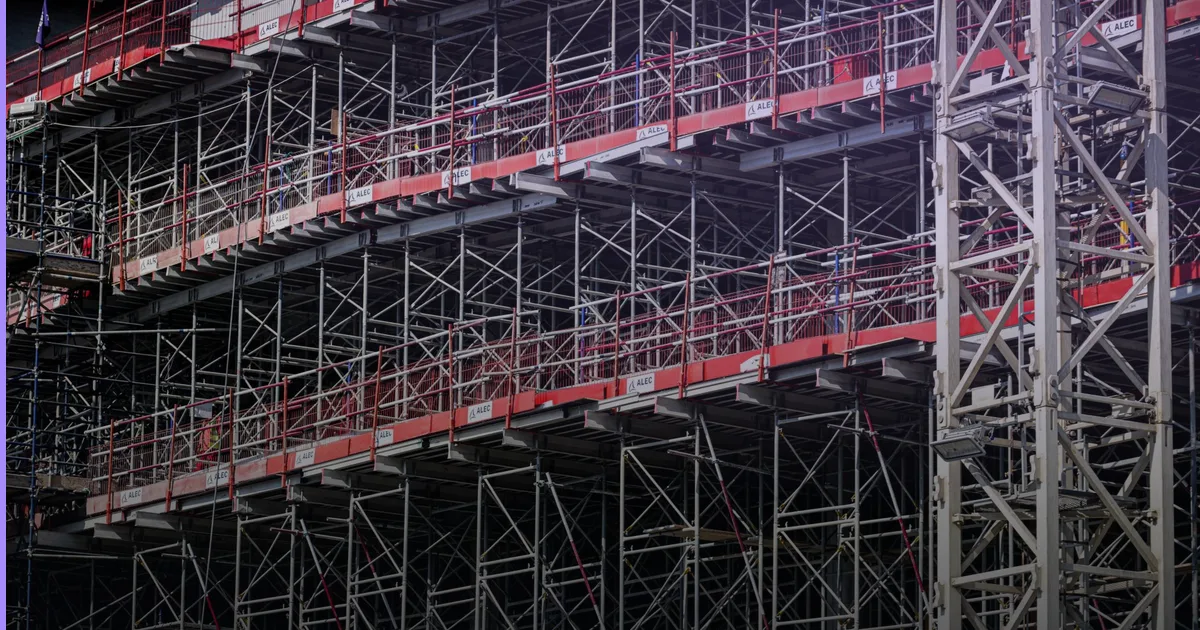
If you run a construction or renovation company in Tashkent, you already know the real bottleneck isn’t concrete or rebar — it’s paperwork, missed calls, and a foreman texting you photos of a site at 11pm because there’s no other system to log progress in. AI automation for construction companies in Uzbekistan is now mature enough to fix exactly this: lead intake, quoting, material tracking, and client updates, without hiring another office manager.
This isn’t about robots on scaffolding. It’s about the boring 80% of the business — quotes, follow-ups, procurement lists, progress reports — running itself so your engineers and site managers spend time on the build, not on Excel.
Why construction firms in Uzbekistan are automating now
Construction and real estate are named priority sectors in the government’s AI Strategy 2030, alongside fintech, retail, and logistics — part of the push that followed the October 2024 presidential decree on AI. IT Park now hosts 2000+ companies with tax breaks for building and adopting exactly this kind of tooling, so the infrastructure and incentive both point the same direction: automate the back office before a competitor does.
Buyers of renovation and construction services in Tashkent and Samarqand also search and decide differently than five years ago. They message a company on Telegram, expect a quote within hours, and compare three contractors before ever calling. A firm that answers in minutes with a real estimate wins the job more often than the firm with the better portfolio but a slow reply.
The three places automation pays off fastest
- Lead capture and qualification — a Telegram bot collects project type, area (m²), location, and budget range before a human ever gets involved.
- Quoting — an AI agent trained on your price list and past estimates drafts a first-pass quote in minutes instead of a day.
- Client updates — automated photo/status updates to a private Telegram channel per client, instead of ad-hoc WhatsApp threads that get lost.
Telegram bots: the actual front door for construction leads
With roughly 27 million Telegram users in Uzbekistan — about 76% of internet users and near-universal reach — a Telegram bot is the natural front desk for a construction company. A typical setup:
- Client messages your bot describing the project (repair, new build, facade work, interior finishing).
- The bot asks structured questions: object type, square meters, city/district, rough budget, timeline.
- The bot either books a site visit directly into your CRM calendar or hands the thread to a sales manager with the qualifying data already attached.
- Follow-up reminders go out automatically if the client goes quiet — a huge source of lost deals in this industry, since renovation decisions often take weeks.
This kind of qualification bot commonly costs 1 500 000–5 000 000 so’m to build well, depending on how many question branches and integrations (CRM, calendar, payment deposit) it needs.
From lead to signed contract: where CRM fits in
Once a lead is qualified, it needs a home. Most Uzbek construction and trade businesses run this on amoCRM or Bitrix24, sometimes paired with 1C for materials/accounting and Sipuni or OnlinePBX for call tracking. An AI agent sitting on top of the CRM can:
- Auto-tag leads by likely deal size and urgency.
- Draft follow-up messages in Uzbek or Russian depending on the client’s language.
- Flag deals that have gone cold for 5+ days.
Businesses that move from spreadsheet-and-memory sales tracking to a real CRM workflow typically see sales lift in the 25–35% range — not because the CRM sells anything itself, but because fewer leads fall through the cracks. Pair that with an AI layer and salespeople commonly become around 40% more efficient per the patterns we see across service businesses adopting this stack.
Material and procurement tracking without a full ERP
Mid-size contractors rarely need a full ERP. What they need is a lightweight system that tells them: what’s on order, what’s on-site, and what’s about to run out. A practical setup pairs 1C or MoySklad for inventory with a Telegram bot that lets a site foreman report material usage from his phone — no laptop, no office visit.
| Automation piece | What it replaces | Typical cost (so’m) |
|---|---|---|
| Lead-capture Telegram bot | Manual phone/WhatsApp intake | 1 500 000–5 000 000 |
| CRM + AI agent for sales follow-up | Spreadsheet + memory | from 5 000 000 |
| Material-tracking bot linked to 1C/MoySklad | Paper logs, verbal reports | 1 500 000–5 000 000 |
| Custom AI agent (quoting, scheduling) | A dedicated office coordinator | from 5 000 000 |
| Ongoing support & updates | Ad-hoc fixes | from ~$50/mo |
- Do you lose leads because replies take hours, not minutes?
- Is your quoting process dependent on one person being available?
- Do you track materials on paper or in someone’s head?
- Are client updates scattered across personal WhatsApp/Telegram chats?
If you checked two or more, automation will likely pay for itself within a few projects.
Payments: deposits and milestone billing
Construction work is usually milestone-billed — deposit, mid-project payment, final payment. Payme (the most-used wallet in Uzbekistan, 10M+ users), Click, and the fast-growing Uzum Bank, together with card rails UzCard and Humo, cover the overwhelming majority of how Uzbek clients actually pay. Libraries like PayTechUZ let a developer wire up all of these behind one integration, so a client can pay a deposit directly from the same Telegram bot that gave them the quote — no separate invoice, no bank transfer chase.
Voice AI for scheduling site visits
Construction firms field a lot of repetitive calls: “when can someone come look at my site?”, “is the quote ready?”, “can I move my appointment?”. A voice AI agent handling first-line calls in Uzbek and Russian can cut the effective cost of that call handling by a wide margin — patterns across similar deployments show reductions of up to roughly 5× versus staffing a full-time call handler, while still routing anything complex to a human.
This connects to the same reasoning that applies across service businesses — see our broader look at AI agents for business in Uzbekistan for how these agents are scoped and priced.
Where construction overlaps with retail and hospitality patterns
The underlying automation pattern — Telegram intake, CRM, AI follow-up, payment integration — is the same one we describe for other verticals. If you also run a showroom or materials retail arm alongside contracting, our piece on AI automation for retail shops in Uzbekistan covers inventory and order-bot specifics. Companies running a client café or site canteen may also find our restaurant automation guide and the related Telegram bot and CRM for restaurants piece useful for the ordering-bot mechanics. For the full national picture, see our 2026 state of the AI and automation market in Uzbekistan.
If you’re earlier in the decision and want the basics on what a Telegram bot can actually do for any business type, start with our complete guide to Telegram bots for business in Uzbekistan.
Frequently Asked Questions
Is a full ERP worth it for a mid-size construction company? Usually not at first. Most firms get 80% of the value from a Telegram bot plus a CRM (amoCRM/Bitrix24) plus 1C/MoySklad for inventory — a fraction of ERP cost and implementation time.
How long does a first automation project take? A focused MVP — a lead-capture bot with CRM integration, for example — typically takes a few weeks, not months, if scoped tightly.
Can the bot handle both Uzbek and Russian clients? Yes. Modern AI language models handle both languages well, and a well-built bot detects and responds in the client’s language automatically.
Do we need to replace our current CRM? No. Most projects bolt automation onto amoCRM or Bitrix24 rather than replacing it — migration is rarely worth the disruption.
Interested in seeing what this could look like for your projects specifically? Browse our services and recent work, then get in touch and we’ll scope a practical first step together.
Building something like this?
Fera Tech ships iOS & full-stack apps end-to-end. Tell us about your project.
Start a project