AI Automation for Hotels and Guesthouses in Uzbekistan
AI automation for hotels and guesthouses Uzbekistan: Telegram booking bots, AI front-desk agents, dynamic pricing, and real so'm price ranges.

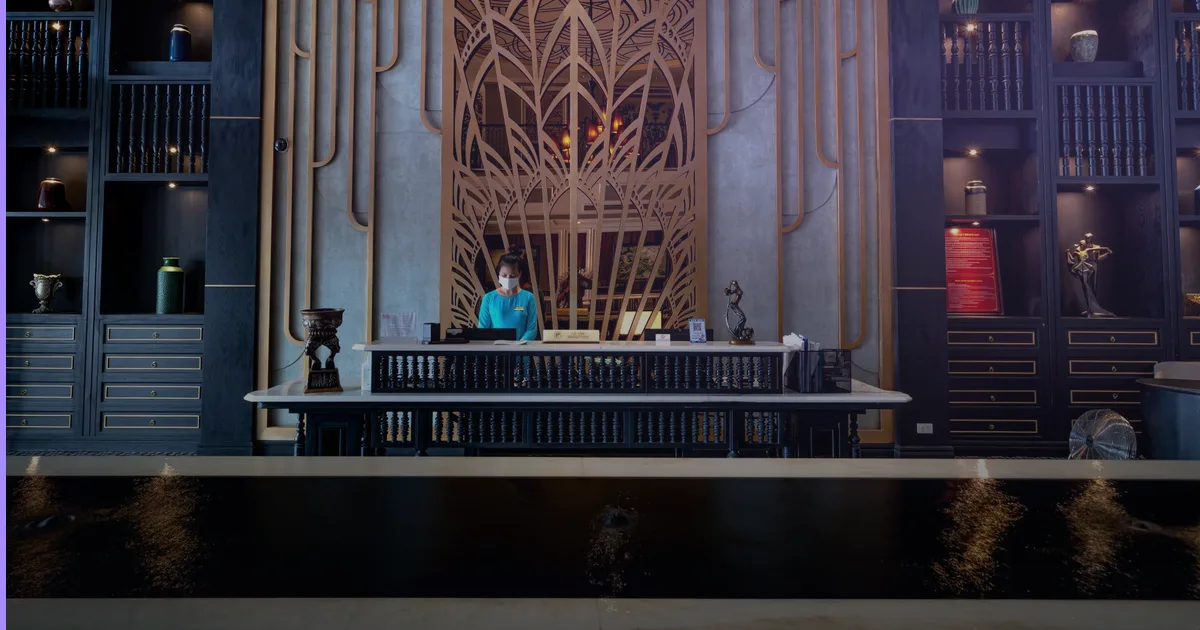
A guesthouse in Samarkand’s old town and a 40-room business hotel near Tashkent City have the same 11pm problem: a guest is messaging on Telegram asking about a late check-in, the front desk is short-staffed, and nobody answers for twenty minutes. That guest books elsewhere next time, or worse, leaves a two-star review about “slow response.”
AI automation for hotels and guesthouses Uzbekistan is quietly becoming the difference between properties that fill rooms in shoulder season and those that don’t. This isn’t about replacing your front-desk team — it’s about giving them an AI layer that handles the repetitive 80% (booking questions, check-in instructions, payment confirmations) so staff can focus on the guest standing in front of them.
Why Hotels in Uzbekistan Need a Different Playbook Than Booking.com Defaults
Most hospitality software assumes a Western guest journey: email confirmations, credit card holds, WhatsApp support. That maps poorly onto how Uzbek travelers and hosts actually operate.
- Telegram, not email, is where guests expect to reach you. With roughly 27 million users and about 95% reach among internet users in Uzbekistan, a hotel that only has a phone number and a booking.com inbox is invisible to a huge share of domestic travelers, business guests, and even many international visitors who install Telegram specifically for local contacts.
- Payment habits are local. Guests paying directly (not through an OTA) expect Payme or Click, sometimes Uzum Bank, not a Stripe checkout page. A booking bot that can’t take a Payme link loses the booking.
- Staff are often bilingual in Uzbek and Russian, guests less predictably so. An AI concierge that only replies in English filters out exactly the domestic travel segment — Tashkent weekenders, Samarqand wedding guests, Bukhara business trips — that fills rooms outside peak foreign-tourist season.
The Government Is Pushing This Direction Too
Since the October 2024 presidential decree and the follow-on AI Strategy 2030, Uzbekistan has committed over $50 million to AI infrastructure, expanded IT Park to 2,000+ resident companies with tax incentives, and set a target of training a million AI specialists. Tourism and hospitality sit inside the broader push alongside retail, fintech, and logistics — meaning digitizing a hotel’s guest experience now is riding a tailwind, not fighting a headwind.
What “AI Automation” Actually Looks Like for a Hotel
Strip away the buzzwords and it comes down to five practical systems, usually built as a Telegram bot connected to a CRM, with an AI layer on top for anything that needs judgment or natural language.
1. A Telegram Booking and Concierge Bot
Guests message your Telegram bot to check room availability, ask about amenities, request late checkout, or get directions from the airport — in Uzbek, Russian, or English, with the AI detecting the language automatically. The bot pulls live availability from your calendar/PMS, quotes a price in so’m, and can send a Payme or Click payment link to confirm a deposit on the spot.
2. AI Front-Desk Assistant for Repetitive Questions
“What time is check-in?” “Is breakfast included?” “Do you have parking?” — these questions eat hours of staff time every week. An AI agent trained on your property’s actual policies answers instantly, 24/7, and hands off to a human the moment a guest asks something outside its scope (a complaint, a special request, a negotiation).
3. CRM-Connected Guest History
Returning guests are gold in a market where word-of-mouth and repeat business trips matter. A CRM (amoCRM and Bitrix24 are the two most common choices among Uzbek businesses) stores guest preferences, past stays, and complaint history, so staff greet a returning guest like they’re remembered — because the system remembers for them.
4. Dynamic Pricing Nudges
You don’t need a full revenue-management suite. A lightweight automation that flags “occupancy is low for the weekend of the 14th, consider a 15% discount push on your Telegram channel” already captures much of the value, without the cost of enterprise RMS tools.
5. Post-Stay Review and Rebooking Flow
An automated message after checkout, in the guest’s language, asking for a review and offering a small discount code for the next stay, run through the same Telegram bot — this is one of the highest-ROI, lowest-effort automations available.
Typical Cost Ranges (So’m), Not Guesses
Pricing depends heavily on scope, but these are the real bands that Uzbek hotel owners typically encounter when they ask for quotes:
| Automation | Typical price range | What it covers |
|---|---|---|
| Simple Telegram booking bot | 500 000 – 1 500 000 so’m | Availability check, FAQ answers, basic booking capture |
| Booking + payment bot | 1 500 000 – 5 000 000 so’m | Payme/Click integration, deposit confirmation, calendar sync |
| CRM + AI concierge agent | 5 000 000+ so’m | Full CRM integration, multilingual AI, guest history, review automation |
| Custom AI agent (advanced) | from ~5 000 000 so’m | Dynamic pricing signals, complex multi-property logic |
| Ongoing support/maintenance | from ~$50/month | Bug fixes, small updates, monitoring |
A focused MVP — say, a Telegram booking bot with Payme integration — is realistically a matter of weeks, not months. Always treat these as ranges; a fair studio will scope your actual property before quoting a fixed number.
What the Market Pattern Looks Like in Practice
Across Tashkent’s small-to-mid hospitality sector, a recurring pattern shows up: properties that move booking and guest Q&A onto a Telegram bot with CRM behind it typically see a meaningful share of their bookings — often a significant chunk of monthly reservations — shift to the automated channel within a few months, freeing staff time for the guests who need a human. This is an illustrative market pattern, not a guaranteed outcome for any specific property — every hotel’s baseline and execution differ.
Separately, businesses using CRM systems across sectors in Uzbekistan commonly report sales uplifts in the region of 30%, and AI-assisted staff are often reported as roughly 40% more efficient at repetitive tasks — figures worth treating as directional benchmarks rather than promises.
A Simple Readiness Checklist
Before you brief a development studio, it helps to know your own answers to these:
- Do you already use a booking calendar or PMS, or are you managing availability manually?
- What share of your current guest messages come through Telegram versus phone or OTA channels?
- Do you currently accept Payme, Click, or Uzum Bank directly, or only through an OTA?
- Is your front desk answering in Uzbek, Russian, English, or a mix — and does your team have time to review AI-drafted answers before they go live?
- Do you have a CRM today, or would this be a first CRM rollout for your property?
Frequently Asked Questions
Do guests actually prefer booking through a Telegram bot over a website? For domestic and regional travelers, yes — Telegram is where they already are, and a bot that replies instantly beats a contact form that gets checked once a day. International guests will often still arrive via OTAs, and the bot works well as the follow-up and support channel.
Can an AI bot really handle both Uzbek and Russian well? Modern AI language models handle both languages competently, including regional phrasing, and can detect which language a guest is using automatically. It’s still worth reviewing sample conversations before launch to make sure tone matches your brand.
Is this only for large hotels, or does it work for a small guesthouse? It works for both, and arguably matters more for a small guesthouse where a single missed message can mean a missed booking. The entry-level Telegram bot tier exists specifically for smaller properties that don’t need a full CRM system yet.
How does this connect to what restaurants and retail shops in Uzbekistan are doing? The underlying architecture is nearly identical — see how it plays out for restaurants automating orders and reservations and for retail shops building AI-driven customer flows. If you run a hotel with an in-house restaurant, there’s real overlap worth exploiting.
Where This Fits in the Bigger Picture
Hotels aren’t automating in isolation — this is part of a broader shift across Uzbekistan’s service sector. For the full landscape, see our overview of AI and business automation in Uzbekistan in 2026. If you want the mechanics behind the booking bot itself, our complete guide to Telegram bots for business in Uzbekistan walks through build options in more depth, and our guide to AI agents for business in Uzbekistan covers how the AI layer itself is typically scoped. Restaurant owners specifically should also see how Telegram bots and CRM reduce manual work and generate more leads.
Fera Tech builds Telegram booking bots, AI concierge agents, and CRM integrations for hotels and guesthouses across Uzbekistan — see examples of our work and the services we offer hospitality clients. If you’re weighing whether this is right for your property, get in touch and we’ll walk through what a realistic build would look like for you.
Building something like this?
Fera Tech ships iOS & full-stack apps end-to-end. Tell us about your project.
Start a project