AI Automation for Logistics and Delivery in Uzbekistan
How Tashkent logistics and delivery businesses use AI automation for logistics and delivery in Uzbekistan to cut costs and dispatch faster.

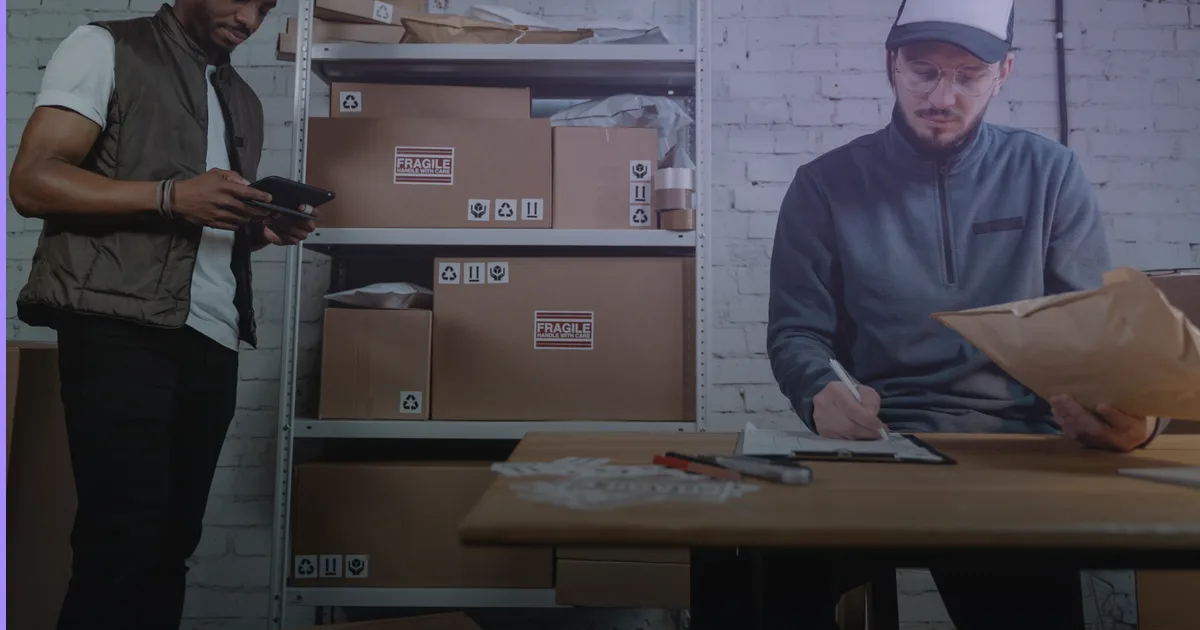
A dispatcher in Tashkent juggling forty delivery drivers on a WhatsApp group chat and an Excel sheet is not a rare sight — it’s the default for most logistics and courier companies in Uzbekistan today. Orders come in by phone, addresses get typed twice, and a driver’s location is anyone’s guess until he calls in. AI automation for logistics and delivery in Uzbekistan is how growing companies are replacing that chaos with a system that runs itself: Telegram-based ordering, automatic route assignment, and a CRM that tells you exactly where every shipment stands.
This isn’t about buying expensive enterprise software built for European fleets. It’s about a handful of connected, practical tools — a bot, a dispatch board, a payment integration — that a mid-sized logistics operation in Tashkent, Samarqand, or Fergana can run on a modest monthly budget. Below is what that actually looks like, what it costs, and how to think about your first step.
Why Logistics in Uzbekistan Is Ready for Automation
Three forces are converging right now. First, e-commerce and food delivery volumes keep growing, and every extra order manually logged into a spreadsheet is a bottleneck. Second, the government’s AI Strategy 2030, backed by a presidential decree and IT Park tax incentives, explicitly names logistics as a priority sector — meaning the tooling, talent, and momentum are all here now. Third, and most practically: Telegram is the channel. With roughly 27 million users and ~76% of the country’s internet users on it, a logistics company that builds its ordering, dispatch alerts, and customer updates around Telegram bots is meeting customers and drivers exactly where they already are — no app download, no WhatsApp workaround needed.
What “automation” actually means here
For most logistics businesses, automation is not one giant platform. It’s three layers working together:
- Intake — a Telegram bot or web form that captures pickup/delivery details, cargo type, and customer contact without a human retyping anything.
- Dispatch and routing — logic (often AI-assisted) that assigns the nearest available driver, tracks status, and flags delays before a customer complains.
- Payments and records — integration with Payme, Click, or Uzum Bank so cash-on-delivery reconciliation stops being a manual nightmare, feeding into a CRM like amoCRM or Bitrix24.
Telegram Bots as the New Dispatch Desk
A well-built dispatch bot lets a customer send a pickup address, get an instant price estimate, and receive live status updates — all inside Telegram, in Uzbek or Russian depending on their preference. On the driver side, the same bot pushes new job assignments, lets drivers confirm pickup/delivery with a tap, and logs GPS location automatically. This is the same pattern used successfully in food delivery, which is worth studying: our guide to AI automation for restaurants in Uzbekistan covers the ordering-bot mechanics that translate directly to courier dispatch.
Market patterns across Tashkent food-delivery and retail operations show Telegram-based ordering often driving 40%+ of monthly transaction volume once customers trust the flow — logistics operators running similar bots for booking and tracking tend to see the same shift, simply because it’s faster than a phone call.
AI Route Assignment and Driver Efficiency
Once orders are captured digitally, an AI layer can do what a tired dispatcher can’t do at scale: constantly re-balance which driver takes which job based on location, current load, and delivery deadline. This doesn’t require a from-scratch AI model — it’s typically a rules-plus-AI agent sitting on top of your existing order data, built to fit how your fleet actually operates rather than a generic template.
The efficiency pattern here mirrors what’s seen across other AI-assisted sales and service functions: automation of routine dispatch decisions commonly removes on the order of 80% of the manual coordination work, freeing dispatchers to handle exceptions — a late driver, a difficult address, an angry customer — instead of routine data entry.
CRM and Payments: Closing the Loop
Dispatch is only half the picture. Without a CRM, delivery history, customer complaints, and repeat-business patterns live nowhere useful. amoCRM remains the dominant choice for Uzbek SMEs, with Bitrix24 a strong second, and IOTA.uz popular for telephony-heavy operations; inventory-heavy logistics businesses often pair this with 1C or MoySklad for warehouse tracking. Payment reconciliation — especially for cash-on-delivery — is where Payme (the market leader with 10M+ users), Click, and increasingly Uzum Bank need to plug directly into your dispatch system, ideally through a unified library such as PayTechUZ rather than three separate manual integrations.
| Automation layer | Typical tool in Uzbekistan | What it replaces |
|---|---|---|
| Order intake | Telegram bot | Phone calls, WhatsApp groups |
| Dispatch/routing | AI agent + CRM (amoCRM/Bitrix24) | Manual driver assignment |
| Payments | Payme, Click, Uzum Bank via PayTechUZ | Manual cash reconciliation |
| Inventory/warehouse | 1C, MoySklad | Paper logs, spreadsheets |
| Telephony | Sipuni, OnlinePBX | Personal phone numbers |
What This Costs and How Long It Takes
Buyers researching this rightly want real numbers, not vague promises. Rough market bands, in so’m:
- A simple Telegram ordering/tracking bot: 500 000 – 1 500 000 so’m
- An ordering + payment-integrated bot (Payme/Click/Uzum): 1 500 000 – 5 000 000 so’m
- A full CRM + AI dispatch agent setup: from 5 000 000 so’m
- A custom AI routing/dispatch agent: from ~5 000 000 so’m
- Ongoing support and maintenance: from ~$50/month
A focused MVP — bot plus basic dispatch logic — is realistically a matter of weeks, not months. Trying to build “the whole platform” on day one is usually how logistics automation projects stall; start with the highest-friction step (usually intake or dispatch) and expand from there.
A simple readiness checklist
- Orders currently come in through more than one untracked channel (phone, WhatsApp, walk-in)
- Drivers are assigned manually by a dispatcher checking availability by memory or phone call
- Cash-on-delivery reconciliation takes more than a few minutes per driver per day
- You have no single record of delivery history per customer
- Customers ask “where is my order” more than a few times a day
If two or more apply, you’re a strong candidate for a first automation phase.
How This Compares Across Sectors
Logistics automation shares a lot of DNA with what’s working in adjacent sectors — worth a look if your business overlaps with retail fulfilment or in-house delivery: our AI automation for retail shops in Uzbekistan piece and the Telegram bot and CRM for restaurants guide both walk through the ordering-to-fulfilment pipeline from a slightly different angle. If you want the fuller picture of what AI agents can and can’t do for a business like yours, our complete guide to AI agents for business in Uzbekistan is a good next read, and the Telegram bot for business complete guide covers bot-building fundamentals in more depth. For the bigger 2026 picture, see our state-of-market report on AI and business automation in Uzbekistan.
Frequently Asked Questions
Do I need to replace my existing CRM to add automation? No. Most logistics automation projects connect to whatever CRM you already run — amoCRM, Bitrix24, or even a spreadsheet during the transition — rather than forcing a rip-and-replace.
Will drivers actually use a Telegram bot? In practice, yes — Telegram already has near-universal reach in Uzbekistan, so asking a driver to tap a button in an app they already have installed is a much smaller ask than onboarding them onto separate dispatch software.
Can this handle both Uzbek and Russian-speaking customers? Yes. Modern AI-based bots handle both languages well, and it’s standard practice to serve each customer in their preferred language automatically.
How fast can I see results? A first-phase bot plus basic dispatch logic is typically live within a few weeks. Full CRM and AI routing integration takes longer but can be rolled out in stages so you see value early.
Fera Tech builds Telegram bots, AI dispatch agents, and CRM integrations for logistics and delivery businesses across Uzbekistan. Take a look at our services or recent work, and if you’d like to talk through what a first automation phase would look like for your fleet, get in touch.
Building something like this?
Fera Tech ships iOS & full-stack apps end-to-end. Tell us about your project.
Start a project