AI Automation for Supermarkets and Grocery in Uzbekistan
How Tashkent supermarkets and grocery chains use AI automation for supermarkets and grocery Uzbekistan: Telegram, CRM, payments, pricing in so'm.

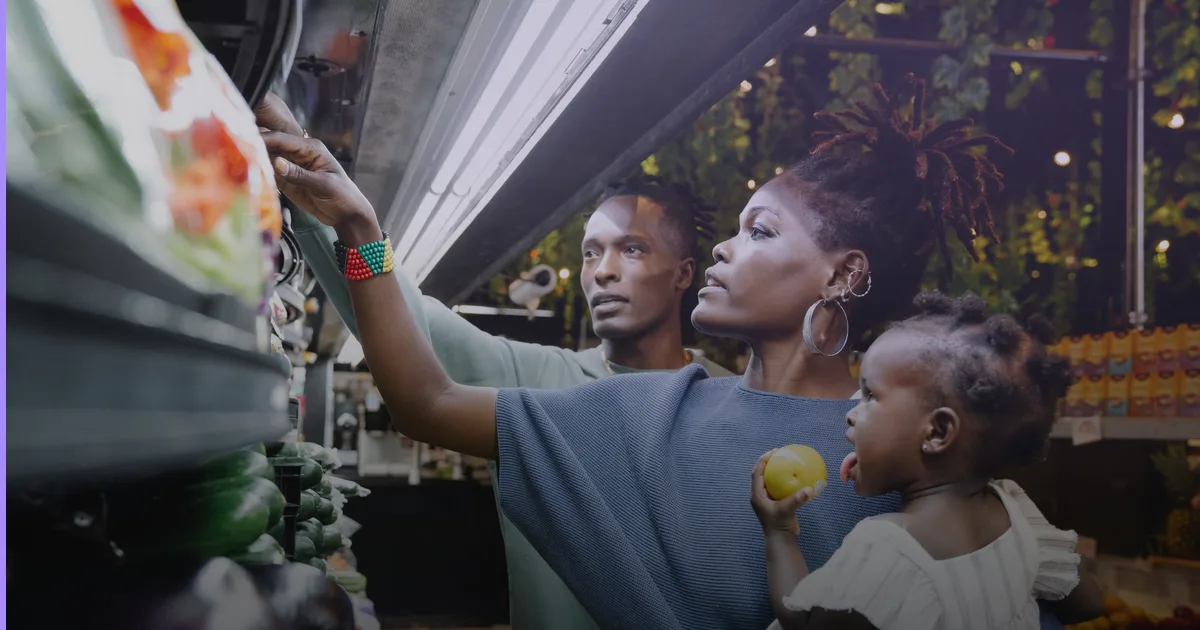
If you run a supermarket or grocery chain in Tashkent, Samarkand, or anywhere in Uzbekistan, your biggest costs are rarely the ones on the receipt. They’re the cashier who re-enters the same order into three systems, the manager who reconciles inventory by phone at midnight, and the customers who never come back because nobody followed up. AI automation for supermarkets and grocery Uzbekistan now means something concrete: Telegram-based ordering, AI-assisted stock and pricing, and CRM that actually talks to your point of sale.
This isn’t about replacing your staff with robots. It’s about removing the repetitive, error-prone steps between “customer wants milk” and “milk is paid for and restocked” — so your team can spend time on service, not data entry.
Why supermarkets in Uzbekistan are automating now
Grocery retail runs on thin margins and high volume, which makes it one of the sectors where automation pays back fastest. Three local forces are pushing this along:
- Telegram dominates. With roughly 27 million users in Uzbekistan — about 76% of internet users — a Telegram ordering bot or loyalty channel reaches nearly everyone your store serves, without an app download.
- Digital payments are mainstream. Payme leads with 10M+ users, followed by Click and the fast-growing Uzum Bank, alongside UzCard and Humo cards. Customers expect to pay from their phone at checkout or for delivery, and libraries like PayTechUZ let developers wire up all of these providers at once.
- Government backing. The October 2024 presidential decree and the AI Strategy 2030, $50M+ in AI infrastructure funding, and IT Park’s tax perks for 2000+ registered companies all make retail one of the named priority sectors for automation.
Retailers who wait usually aren’t saving money — they’re paying the same manual-labour cost every month instead of a one-time build.
What actually gets automated in a grocery business
Ordering and delivery via Telegram
A well-built Telegram bot handles browsing the catalogue, adding to cart, choosing delivery or pickup, and taking payment — all inside the app your customers already have open all day. For food-delivery and online stores in Tashkent, Telegram bots are commonly reported to drive 40%+ of monthly turnover once adopted properly, because the friction of “download our app” simply disappears.
CRM and customer follow-up
Every order, complaint, and loyalty point should land in one CRM — amoCRM and Bitrix24 are the most common choices among Uzbek retailers, sometimes paired with IOTA.uz for call handling. When a customer’s purchase history, WhatsApp/Telegram thread, and delivery status live in one place, staff stop losing context between channels. Retailers that consolidate this way typically see sales lift on the order of 30%, simply because follow-ups stop falling through the cracks.
Inventory and pricing
Stock counts, expiry dates, and supplier orders for a multi-branch chain are hard to keep accurate by spreadsheet. Syncing your point-of-sale with 1C or MoySklad, then layering a simple AI agent on top to flag slow-moving stock, suggest reorder points, or adjust pricing on perishables, removes a large share of the manual reconciliation work — automation of this kind commonly removes on the order of 80% of routine manual tasks in back-office retail workflows.
AI-assisted customer service
A chatbot that answers “are you open,” “do you deliver to Chilanzar,” or “is this product halal-certified” in Uzbek or Russian — correctly, and instantly — cuts the load on your staff phone line. Retailers who add a voice or chat AI layer to their support line often report call-handling costs dropping by up to roughly 5× compared with a fully manual call centre, because the AI absorbs the repetitive 80% and routes only the hard cases to a human.
What it costs and how long it takes
Uzbek grocery businesses generally fall into one of three automation tiers. Ranges below reflect typical market pricing — treat them as planning bands, not quotes.
| Automation level | What’s included | Typical price (so’m) | Build time |
|---|---|---|---|
| Simple Telegram bot | Catalogue browsing, basic ordering, FAQ answers | 500,000 – 1,500,000 | 1–2 weeks |
| Ordering + payment bot | Cart, delivery/pickup, Payme/Click/Uzum integration | 1,500,000 – 5,000,000 | 3–5 weeks |
| CRM + AI agent system | CRM sync, inventory alerts, AI customer service, reporting | 5,000,000+ | 6–10 weeks |
Ongoing support and monitoring for any of these usually starts from around $50/month.
A quick self-check before you start
- Do you know how many orders per day come through phone calls versus Telegram or in-store?
- Is your inventory tracked in a system (1C, MoySklad, spreadsheet), or only in someone’s memory?
- Do you currently accept Payme, Click, or Uzum Bank for delivery orders?
- Does anyone follow up with a customer after a missed delivery or complaint — and how?
- Could a member of staff answer “what’s automatable here” in one sentence?
If two or more of these are shaky, a focused automation MVP is usually the right next step — often weeks, not months, to see the first result.
How this fits into the bigger retail automation picture
Supermarkets share a lot of automation patterns with smaller shops and with food service — worth reading if you’re comparing approaches: our guide to AI automation for retail shops in Uzbekistan covers the smaller-format case, while AI automation for restaurants in Uzbekistan and Telegram bot and CRM for restaurants show how the same Telegram-plus-CRM pattern plays out for food service specifically. For the general playbook behind any of these, see our complete guide to Telegram bots for business in Uzbekistan and our guide to AI agents for business in Uzbekistan. And if you want the broader market context — what’s actually happening across sectors — our 2026 state of the AI and automation market in Uzbekistan is a good starting point.
Frequently Asked Questions
Do I need a mobile app, or is a Telegram bot enough? For most grocery and supermarket businesses in Uzbekistan, a Telegram bot is enough and is cheaper and faster to launch than a native app, since it reaches customers where they already spend time.
Which payment provider should I integrate first? Start with Payme, since it has the largest user base, then add Click and Uzum Bank — most automation projects wire up all three from day one using a unified library.
Will an AI agent replace my cashiers or support staff? No — in practice it absorbs repetitive questions and data entry, freeing staff for service, complaint handling, and tasks that need a human judgment call.
How fast can we see results? A simple ordering bot can launch in 1–2 weeks; a fuller CRM and AI system typically takes 6–10 weeks, with the first measurable change in order volume or response time visible well before full rollout.
If you’re weighing where to start, we’d rather talk it through than sell you a package you don’t need — see examples of what we’ve built for other businesses or explore our full services. Get in touch and tell us what’s slowing your store down.
Building something like this?
Fera Tech ships iOS & full-stack apps end-to-end. Tell us about your project.
Start a project