AI Automation for Wholesale and Distribution in Uzbekistan
How Uzbek wholesalers use AI automation for wholesale and distribution Uzbekistan to cut manual order work, speed up dispatch, and grow margins.

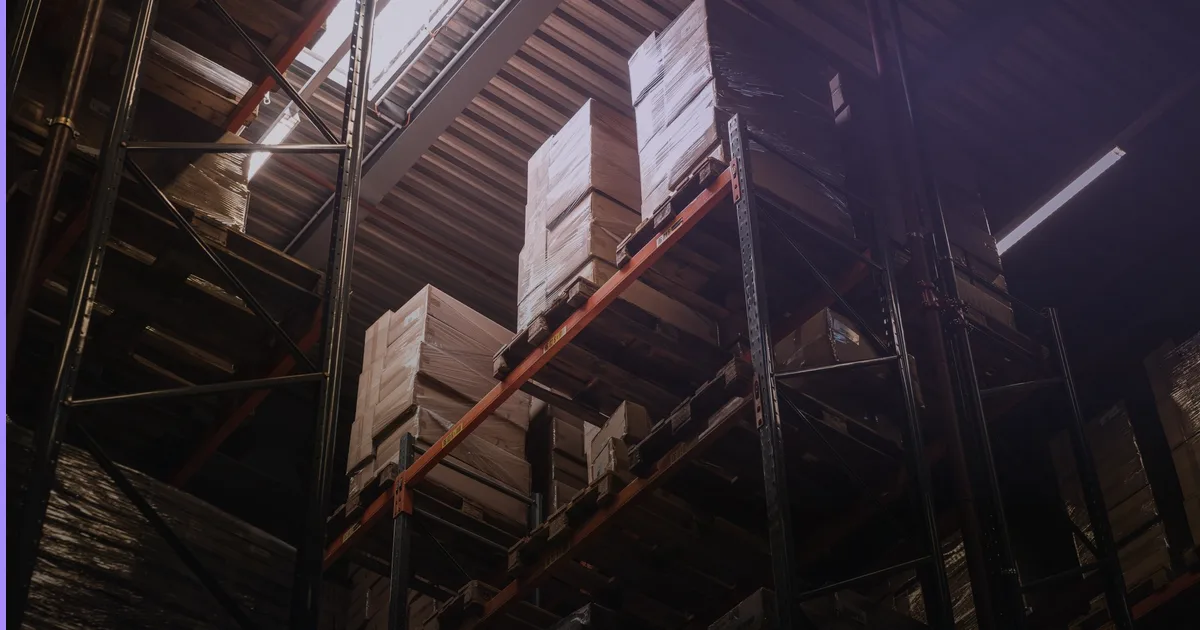
If you run a wholesale or distribution business in Tashkent, Samarqand, or anywhere along Uzbekistan’s supply routes, you already know the real bottleneck isn’t demand — it’s operations. Orders come in through five different channels, warehouse staff re-key the same numbers into a notebook and then into 1C, and by the time a dealer’s payment clears through Payme or Click, someone has already promised the same pallet to two different buyers.
AI automation for wholesale and distribution Uzbekistan businesses are adopting right now solves exactly this class of problem: it doesn’t replace your sales team, it removes the repetitive, error-prone steps between “a dealer wants 200 units” and “the invoice is paid and the truck is loaded.” This post walks through what that actually looks like, what it costs in so’m, and where to start.
Why Wholesale Distributors in Uzbekistan Are Automating Now
Distribution margins are thin and volume-dependent, so every hour a manager spends re-typing an order from a phone call or a Telegram voice message is an hour not spent negotiating better terms with new dealers. Three forces are pushing wholesalers toward automation this year:
- The government’s AI Strategy 2030 push (following the October 2024 presidential decree) has put over $50M into AI infrastructure and IT Park tax perks, with logistics and retail named as focus sectors — meaning the tooling and local talent to build this is now genuinely available.
- Dealers and retail buyers increasingly expect to order the same way they shop: through Telegram, which reaches roughly 95% of the country’s ~27 million internet users. A distributor still taking orders only by phone is invisible to a large share of younger buyers.
- Competing wholesalers are already doing it. In a typical Tashkent distribution business, automation of order intake and payment reconciliation removes a large share of routine manual work — often cited at up to roughly 80% — freeing staff for account management instead of data entry.
What “Automation” Means Here, Concretely
It’s not a vague AI buzzword. For a wholesale operation it usually means three connected pieces working together: a Telegram ordering bot for dealers, an AI agent that reads incoming messages (text or voice, Uzbek or Russian) and turns them into structured orders, and a CRM/inventory sync so stock, pricing tiers, and payment status stay accurate across 1C or MoySklad without anyone double-typing.
Core Use Cases for AI Automation in Wholesale
1. Dealer Ordering via Telegram Bot
Instead of dealers calling or messaging a manager directly, they open a Telegram bot, see live stock and tiered pricing for their account, and place an order in under a minute. The bot confirms availability instantly rather than making the dealer wait for a human reply — which matters when a competitor’s bot answers in seconds.
2. AI Agents for Order Parsing and Reordering
Many distributors still get orders as free-form Telegram messages (“200 kop, 50 kolbasa, yetkazib bering ertaga”) or voice notes. An AI agent trained for this can parse both Uzbek and Russian input, match products against your catalogue, and flag ambiguous items for human confirmation rather than guessing silently. Voice AI agents applied to order intake and support lines can cut related call-handling costs dramatically — market patterns point to reductions of up to roughly 5x versus a fully manual call centre.
3. Payment Reconciliation
Wholesale payments arrive through Payme, Click, Uzum Bank, bank transfer, and sometimes cash on delivery. Automating the match between an incoming payment and an open invoice — using libraries like PayTechUZ to unify the providers — removes the manual spreadsheet reconciliation that eats a bookkeeper’s whole afternoon.
4. CRM and Inventory Sync
Connecting your ordering bot to amoCRM or Bitrix24 (the two most common CRMs in the market) and to 1C or MoySklad for inventory means a dealer’s order automatically updates stock, triggers a warehouse pick list, and logs the interaction for your sales manager — no manual handoff. Distributors that centralise this typically see measurable gains; CRM-driven sales processes are commonly reported to lift sales by around 30%.
What It Costs: Realistic Price Bands in So’m
| Automation scope | Typical range (so’m) | Timeline |
|---|---|---|
| Simple Telegram order-intake bot | 500,000 – 1,500,000 | 1–2 weeks |
| Ordering + payment integration bot | 1,500,000 – 5,000,000 | 2–4 weeks |
| Full CRM/AI-agent automation (parsing, CRM sync, inventory) | from 5,000,000 | 4–8 weeks |
| Custom AI agent (voice or complex dealer logic) | from ~5,000,000 | project-dependent |
| Ongoing support and maintenance | from ~$50/month | — |
These are ranges, not fixed quotes — actual cost depends on how many payment providers, catalogue size, and existing systems (1C, MoySklad) need to connect. A focused MVP is typically weeks, not months.
A Simple Rollout Checklist
- Map your current order channels (phone, Telegram, WhatsApp, in-person) and pick the one to automate first
- Decide which CRM you’ll standardise on — amoCRM or Bitrix24 are the common choices
- Confirm which payment providers (Payme, Click, Uzum Bank, UzCard/Humo) you actually need to support
- Export a sample of real dealer orders (including messy Uzbek/Russian phrasing) to test an AI parser against
- Start with one automation (ordering bot or payment reconciliation) before layering on AI agents
How This Fits With the Rest of Your Business
Wholesale automation rarely stands alone. If you also run retail-facing operations, it’s worth reading how the same principles apply in AI automation for retail shops in Uzbekistan, and if food distribution is part of your business, see AI automation for restaurants in Uzbekistan and Telegram bot and CRM for restaurants: more leads, less manual work for adjacent patterns. For the bigger picture on where the country’s automation market is heading, our 2026 state-of-market report on AI and business automation in Uzbekistan is a useful starting point, and our complete guide to Telegram bots for business and complete guide to AI agents for business go deeper on the underlying technology.
Frequently Asked Questions
Do I need to replace my 1C or MoySklad system? No. Good automation integrates with what you already use rather than replacing it — the bot and AI agent become a new input layer on top of your existing inventory and accounting system.
Will an AI agent understand orders written in a mix of Uzbek and Russian? Modern AI agents built for this market handle both languages well, including informal phrasing and voice messages, which matters since most dealers won’t switch how they naturally communicate.
How fast can we see results? A simple Telegram ordering bot can be live within one to two weeks. Full CRM and payment integration typically takes four to eight weeks depending on how many systems need to connect.
What if our dealers still prefer calling? Automation doesn’t have to be all-or-nothing — many distributors run the bot alongside phone ordering and gradually shift volume as dealers see the bot is faster and always available.
If your wholesale operation is still running on notebooks, phone calls, and manual spreadsheet reconciliation, it’s worth a short conversation about what a focused first automation could look like for your specific product lines and dealer network. Take a look at our services or recent work, then get in touch and we’ll map out the realistic first step.
Building something like this?
Fera Tech ships iOS & full-stack apps end-to-end. Tell us about your project.
Start a project