Telegram Bot CRM for Auto Dealers and Service Centers
How auto dealers and service centers in Uzbekistan use a Telegram bot CRM to book more repairs, sell more cars, and cut manual admin.

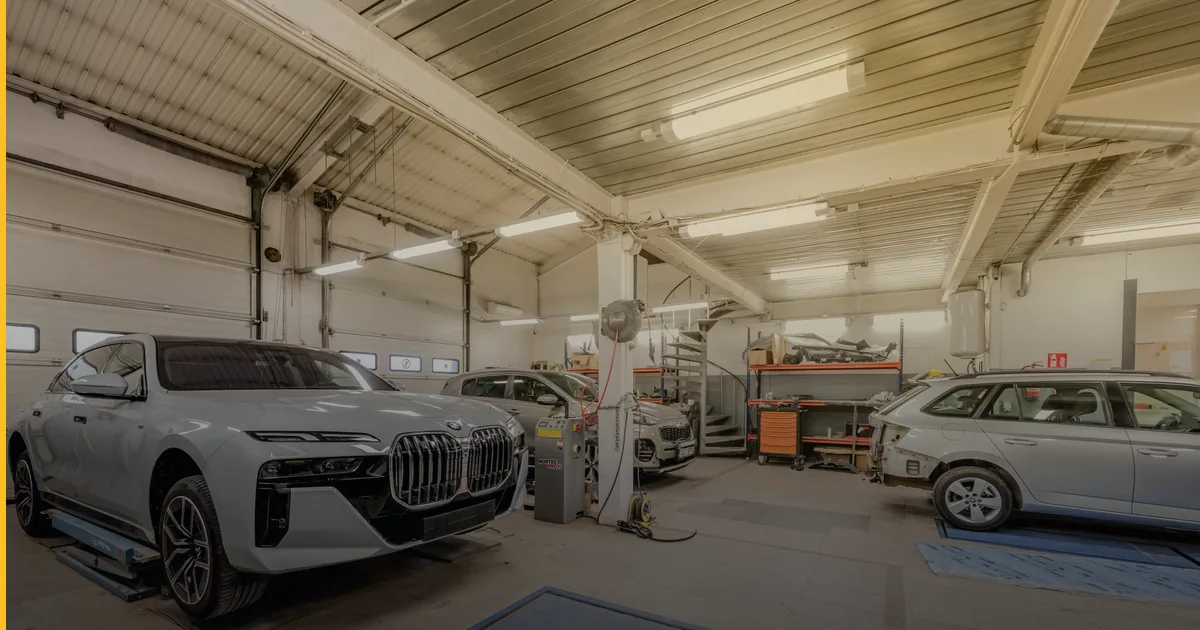
If you run a car dealership or a service station in Tashkent, your admin’s phone is probably the busiest tool in the business. Customers text on Telegram to ask about a spare part, call to book an oil change, and message again the next day to ask “is my car ready yet.” A Telegram bot CRM for auto dealers and service centers turns this scattered flow into one system: bookings land in a calendar, leads land in a pipeline, and nobody has to remember who asked what.
This matters more in the auto sector than almost anywhere else, because the buying cycle is long and the trust bar is high. A customer might message five times before booking a test drive or a diagnostic. If those five messages live in a personal phone instead of a CRM, you lose the thread — and often the sale.
Why Auto Businesses in Uzbekistan Are Automating Now
Telegram already reaches close to 95% of internet users in the country, roughly 27 million people. For a dealership or service center, that means your customer is almost certainly already on Telegram — the only question is whether you’re answering them with a bot that never sleeps or with a mechanic who checks his phone between jobs.
Market patterns across dealerships and service networks in Tashkent and Samarqand show a consistent effect once a booking bot and CRM are combined: fewer no-shows because reminders go out automatically, and a real lift in repeat visits because service history and next-due dates are tracked instead of forgotten. CRM adoption more broadly is associated with roughly 30% higher sales conversion, and shifting routine coordination to automation typically removes about 80% of the manual back-and-forth that used to eat a manager’s day.
What Changes for a Dealership
- Inventory (available cars, trims, prices) is browsable inside the Telegram chat, not just on a website nobody checks twice.
- Test-drive requests and trade-in enquiries become CRM leads with a status, not a WhatsApp screenshot someone forwards internally.
- Financing or leasing questions get routed to the right salesperson automatically based on the model asked about.
What Changes for a Service Center
- Booking a service slot happens in the bot: pick a date, pick a service (oil change, diagnostics, tire change), get a confirmation.
- Automatic reminders the day before an appointment cut no-shows meaningfully.
- Service history per car (VIN or plate number) lives in the CRM, so the bot can proactively message “your next oil change is due” instead of waiting for the customer to remember.
The Core Pieces of an Auto Telegram Bot + CRM Setup
A setup that actually gets used day to day usually has these parts working together:
- Telegram bot for inbound enquiries — parts pricing, service booking, test-drive requests
- CRM (commonly amoCRM or Bitrix24 in this market) as the single pipeline for leads and repair jobs
- Payment integration — Payme or Click for deposits, service fees, or full payment
- Automated reminders for bookings, follow-ups, and recurring service due dates
- A simple dashboard for the manager: how many leads this week, how many converted, average time to respond
None of this needs to launch at once. Most shops start with the booking bot alone, prove it reduces no-shows, then connect it to a CRM once volume justifies it.
How Leads Actually Flow Through the System
- A customer messages the bot about a service or a car model.
- The bot answers common questions instantly (hours, price ranges, availability) and books straightforward requests directly.
- Anything that needs a human — a trade-in valuation, a complex repair quote — gets created as a lead in the CRM, assigned to the right person.
- The CRM tracks the conversation until it closes: booked, sold, or lost (with a reason, so patterns show up over time).
- Follow-ups (next service due, a car that’s back in stock, a financing offer) go out automatically from the CRM, not from someone’s memory.
What This Costs in Uzbekistan
Pricing depends heavily on scope, but these are the ranges buyers in this market typically see:
| Setup | Typical price range (so’m) | What it covers |
|---|---|---|
| Simple booking bot | 500 000 – 1 500 000 | FAQ answers, service booking, basic reminders |
| Booking + payment bot | 1 500 000 – 5 000 000 | Deposits/payment via Payme or Click, order/booking flow |
| Full CRM + AI-agent bot | from 5 000 000 | CRM integration, lead pipeline, automated follow-ups, reporting |
| Custom AI agent (parts lookup, quoting) | from ~5 000 000 | Trained on your catalogue/pricing, handles complex queries |
| Ongoing support | from ~$50/month | Monitoring, small changes, uptime |
These are ranges, not fixed quotes — a single-location service center and a multi-branch dealership network need very different builds. A focused first version is typically weeks of work, not months.
Where CRM Choice Matters
For dealerships and service centers, the CRM decision usually comes down to amoCRM versus Bitrix24, sometimes alongside 1C or MoySklad for parts inventory, and Sipuni or OnlinePBX for call tracking. If you’re weighing this decision in detail, our amoCRM vs Bitrix24 guide walks through the trade-offs for exactly this kind of business.
If you haven’t set up a Telegram bot before, it’s worth reading our complete guide to Telegram bots for business first — the same fundamentals apply whether you’re selling cars or booking oil changes. And if you want the wider picture of where automation is heading in this market, our 2026 state-of-market report on AI and automation in Uzbekistan is a useful companion read, alongside sector notes on restaurants, retail shops, and the restaurant automation deep-dive — the patterns transfer more than you’d expect.
Frequently Asked Questions
Do customers actually use a Telegram bot to book a car service, or do they still just call? Both happen, and that’s fine — a well-built bot doesn’t replace the phone, it absorbs the repetitive part (hours, availability, simple bookings) so staff spend calls on things that need a human, like diagnosing a noise or negotiating a trade-in price.
Can the bot handle both Uzbek and Russian customers? Yes. Most shops in Tashkent and Samarqand serve customers in both languages, and modern bots (especially AI-assisted ones) handle switching between them without a separate build for each.
Is a CRM overkill for a single service center? Not if you’re currently tracking bookings in a notebook or a group chat. Even a lightweight amoCRM setup pays for itself quickly once you can see which leads went cold and follow up automatically instead of manually.
How long does it take to launch? A booking bot alone can launch in one to two weeks. Adding CRM integration, payments, and reporting typically pushes a full build to four to eight weeks, depending on how many systems it needs to talk to.
This kind of setup fits naturally into the wider work we do — see our services or a sample of recent work. If you’re weighing a Telegram bot, a CRM rollout, or both for your dealership or service center, get in touch and we’ll help you scope something that fits your volume and budget.
Building something like this?
Fera Tech ships iOS & full-stack apps end-to-end. Tell us about your project.
Start a project