Telegram Bot CRM for Language Schools in Uzbekistan
How language schools in Tashkent use a Telegram bot CRM to capture more trial-lesson leads, cut admin work, and stop losing students to slow replies.

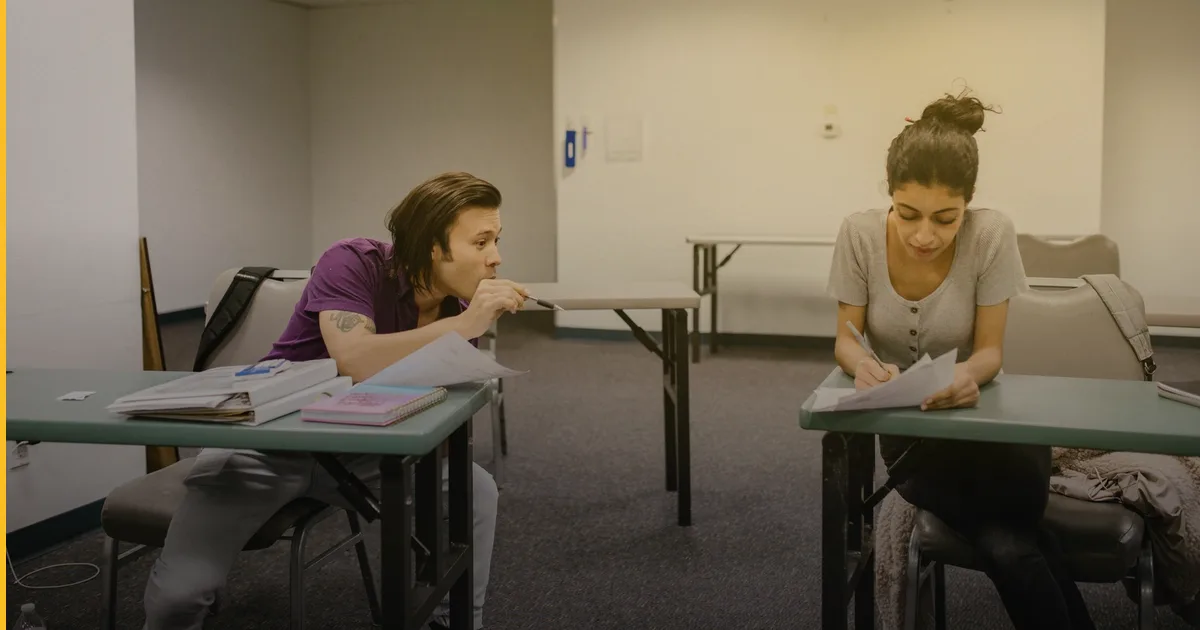
If you run an English, Korean, or IELTS-prep school in Tashkent, your admin’s phone is probably the bottleneck. A lead messages on Instagram at 9pm asking about the beginner group, nobody replies until morning, and by then they’ve already booked a trial lesson at the school down the street. A Telegram bot CRM for language schools closes that gap: it answers instantly, books the trial, and hands your admin a clean pipeline instead of forty scattered chats.
This matters more in language schools than almost any other local business, because the buying decision usually happens inside a five-minute window right after someone sees your ad or asks a friend for a recommendation. Telegram already reaches about 95% of internet users in Uzbekistan, so the lead is already messaging you there — the only question is whether a bot answers in seconds or a tired admin answers the next day.
Why Language Schools Lose Leads Without Automation
Most schools run enrollment through a mix of an Instagram inbox, a WhatsApp number nobody checks consistently, and a spreadsheet an admin updates when they remember. That setup breaks down at exactly the moments that matter:
- Evening and weekend enquiries (when most parents and students actually browse) go unanswered until the next business day.
- Group-level and schedule questions get repeated dozens of times a week by a human instead of a bot.
- Leads who don’t book immediately disappear — there’s no follow-up sequence, so warm interest cools before anyone books a trial.
Market patterns from Tashkent service businesses that add a Telegram + CRM layer typically show CRM lifting sales conversion by roughly 30%, mostly because nothing falls through the cracks anymore. Numbers vary by school size and marketing volume, but the mechanism is the same everywhere: faster response plus organized follow-up beats manual chat juggling.
What a Language-School Bot Actually Does
A well-scoped bot for this vertical typically handles:
- Level and course matching — a short quiz (“beginner/intermediate/advanced”, “general English or IELTS”) that routes the lead to the right group automatically.
- Trial-lesson booking — showing open slots for a group or teacher and confirming the seat without a human touching the calendar.
- Payment collection — course fees or a deposit taken via Payme or Click directly in the chat, reducing no-shows.
- Automated reminders — a message the night before and the morning of a trial lesson, which alone can meaningfully cut no-show rates.
- Re-engagement broadcasts — a monthly message to past leads about a new intake, cohort start date, or seasonal discount.
Bot + CRM: How the Pieces Fit Together
The bot is the front door; the CRM is where your admin actually manages the pipeline once a lead exists. For most schools this means routing every Telegram conversation into amoCRM — still the dominant CRM choice locally — or Bitrix24 for schools that also want task management and internal reporting. Some smaller centers use IOTA.uz for a lighter, telephony-friendly setup.
| Stage | Without a system | With bot + CRM |
|---|---|---|
| First contact | Admin replies when free, often next day | Bot replies instantly, any hour |
| Level matching | Repeated manually in every chat | Automated quiz, routed on the spot |
| Trial booking | Back-and-forth over available times | Bot shows live slots, confirms instantly |
| Payment | Cash or manual transfer, easy to forget | Payme/Click link inside the chat |
| Follow-up | Rarely happens | Scheduled reminders + broadcasts |
| Reporting | Guesswork from memory | Pipeline visible in amoCRM/Bitrix24 |
What This Costs and How Long It Takes
Pricing depends on scope, but the ranges buyers typically see in Uzbekistan are:
- A simple Telegram FAQ/booking bot: 500 000–1 500 000 so’m.
- A bot with trial-lesson booking and payment collection: 1 500 000–5 000 000 so’m.
- A CRM-integrated bot with automated follow-ups, level routing, and reporting: 5 000 000 so’m and up.
- Ongoing support and small updates: from roughly $50/month.
A focused MVP — booking plus basic CRM sync — is realistically a matter of weeks, not months. Trying to launch every feature (payments, multi-language routing, teacher scheduling, broadcasts) at once tends to slow the project down without adding proportional value in the first release.
A Simple Rollout Checklist
- Map your current enrollment funnel: where do leads actually come from (Instagram, referrals, ads)?
- Decide which CRM fits — amoCRM, Bitrix24, or IOTA.uz — based on what your admin team already knows.
- Scope the bot’s first version: level quiz, trial booking, and payment are usually enough to start.
- Connect a payment provider (Payme or Click cover the large majority of local students and parents).
- Set up one reminder sequence and one re-engagement broadcast before adding anything more advanced.
Where Uzbek and Russian Come In
Most Tashkent language schools serve students who are equally comfortable in Uzbek and Russian, and some parents prefer one over the other for practical questions. A bot that detects language early — or simply offers a language choice as the first message — avoids losing leads who’d rather not read a script in the wrong language. This is a small addition in scope but a real difference in trust.
How This Connects to the Bigger Automation Picture
Language schools aren’t unique in this pattern — the same logic drives results across restaurants and cafes running Telegram ordering and CRM setups, and across retail shops in Uzbekistan automating their sales funnel. If you want the fuller local context — why Telegram dominates, what’s driving the shift, and where the government’s AI push fits in — our overview of AI and business automation in Uzbekistan for 2026 is a good next read. For a broader, step-by-step look at bots outside education specifically, see our complete guide to Telegram bots for business in Uzbekistan, and if you’re still deciding between CRMs, our amoCRM vs Bitrix24 comparison breaks down the tradeoffs in more depth.
Frequently Asked Questions
Do we need a CRM if we already have a Telegram bot? A bot without a CRM behind it still leaves your admin manually tracking who paid, who no-showed, and who needs a follow-up. For a handful of leads a week that’s fine; past that, a CRM is what actually prevents leaks in the pipeline.
Which CRM should a language school pick — amoCRM or Bitrix24? amoCRM tends to suit smaller, sales-focused schools that mainly need a clean pipeline and quick setup. Bitrix24 fits schools that also want internal task management, teacher scheduling, or more detailed reporting. Either integrates with a Telegram bot without much friction.
How much does a language-school bot realistically cost? Simple booking-and-FAQ bots typically start around 500 000 so’m; a version with payments and CRM sync commonly lands in the 1 500 000–5 000 000 so’m range, and a fuller AI-agent-style setup starts near 5 000 000 so’m. Get a scoped quote rather than assuming your case fits the low end.
Can the bot handle both Uzbek and Russian without building two separate versions? Yes — modern bot builds can detect or ask for language preference once and serve the rest of the flow accordingly, without duplicating the whole system.
If you’re ready to stop losing trial-lesson leads to a slow reply, we’d be glad to look at your current funnel and scope what a focused bot-plus-CRM setup would take — see examples of our related services and recent work, then get in touch to talk specifics.
Building something like this?
Fera Tech ships iOS & full-stack apps end-to-end. Tell us about your project.
Start a project