Telegram Bot CRM for Manufacturers in Uzbekistan
How Uzbekistan factories use a Telegram bot CRM for manufacturers to manage orders, dealers, and production — pricing, tools, and rollout plan.

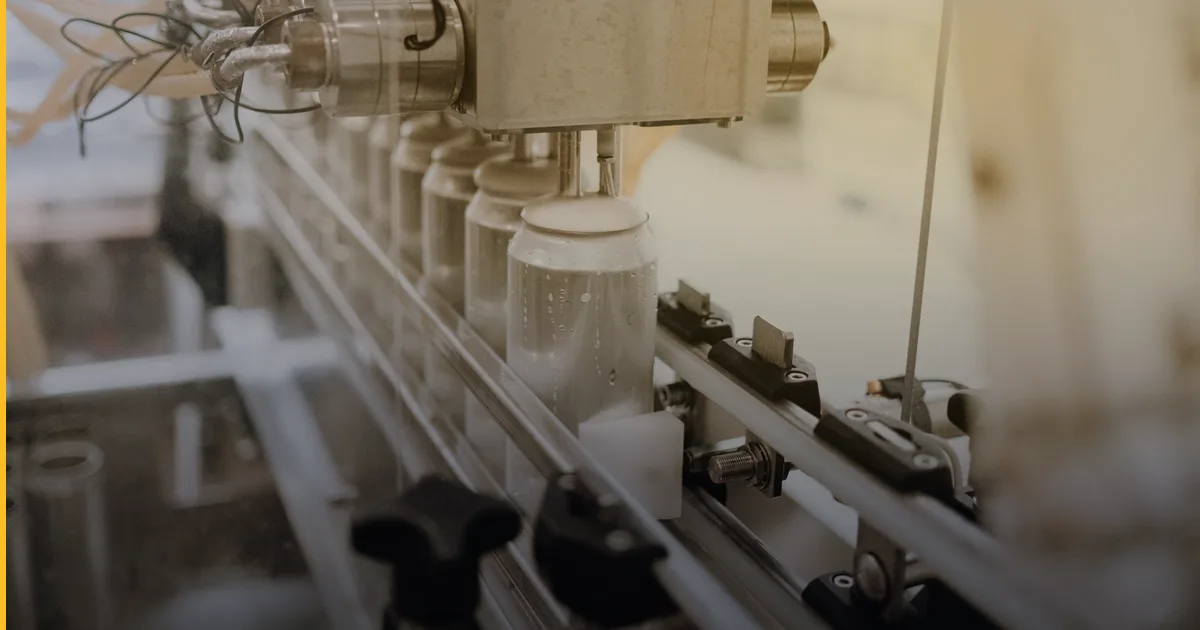
If you run a factory or workshop in Tashkent, Andijan, or Namangan, your order book probably lives across three places at once: a stack of WhatsApp or Telegram chats with dealers, a paper ledger by the production line, and someone’s memory of what was promised for delivery this week. A Telegram bot CRM for manufacturers pulls all of that into one system — dealers order through a bot, the factory floor sees real production status, and nothing gets promised twice.
This is not a theoretical upgrade for Uzbek manufacturers. Wholesale buyers, regional dealers, and even retail customers already live on Telegram — it reaches roughly 95% of the country’s internet users. The question isn’t whether your buyers are on Telegram; it’s whether your order intake still runs on someone manually copying numbers between chats and an Excel sheet.
Why Manufacturing Businesses in Uzbekistan Need More Than a Group Chat
A typical Uzbek manufacturer — textiles, food processing, furniture, construction materials — sells through a mix of channels: direct wholesale, regional dealers, and sometimes a retail storefront. Each channel usually has its own communication habit. Dealers text the sales manager on Telegram. A retail customer calls. Production updates get relayed verbally between the floor supervisor and the office.
The result is familiar to almost every owner: orders get lost between shift changes, a dealer’s order is confirmed twice by two different people, and nobody can say with confidence how much of a product line is actually in stock until someone walks the warehouse. Government policy is nudging the whole economy toward digitizing exactly this kind of process — the 2024 presidential decree and the AI Strategy 2030 push automation across manufacturing, logistics, and retail, backed by IT Park tax incentives for companies that build or adopt these systems.
What “Telegram Bot CRM” Actually Means for a Factory
In practice this is two connected pieces:
- A Telegram bot that dealers and wholesale clients use to browse the current catalogue, place an order, check price and stock, and get status updates — no app install, no new habit.
- A CRM (commonly amoCRM or Bitrix24 in Uzbekistan) that receives every bot order automatically, assigns it to a sales manager, and tracks it through production, dispatch, and payment — instead of living in a manager’s head or a shared spreadsheet.
For manufacturers with heavier inventory needs, this often connects to 1C or MoySklad so that stock counts update automatically as orders come in and goods leave the warehouse.
What a Manufacturing Telegram Bot Should Actually Do
Not every factory needs the same bot. But most useful builds cover a similar core:
- Dealer self-service ordering — registered dealers see their price tier, place orders, and get an automatic order confirmation.
- Stock visibility — the bot answers “is product X in stock” instantly, instead of a dealer waiting hours for a manager to check.
- Production status updates — a buyer can ask where their order is: queued, in production, ready for dispatch.
- Payment collection — invoices sent through the bot with a Payme or Click link, since these two cover the large majority of digital payments in Uzbekistan, alongside growing Uzum Bank usage.
- New lead capture for retail or one-off wholesale enquiries that come in outside your regular dealer network.
A Simple Framework for Scoping Your Bot
Before building anything, most manufacturers benefit from separating three layers of complexity:
| Layer | What it covers | Typical price band |
|---|---|---|
| Basic order bot | Catalogue browsing, order placement, notifications | 500 000–1 500 000 so’m |
| Ordering + payment bot | Above, plus Payme/Click checkout and invoicing | 1 500 000–5 000 000 so’m |
| CRM/AI-agent integration | Full CRM sync, dealer tiers, production tracking, AI-assisted replies | from 5 000 000 so’m |
These are typical ranges seen across similar automation projects in Uzbekistan, not fixed quotes — final scope depends on your product catalogue size, dealer count, and how deep the CRM/1C integration needs to go. Ongoing support and small iterations usually run from around $50/month.
How This Changes Day-to-Day Operations
The pattern seen across Tashkent SMEs that adopt CRM is a sales lift of roughly 30%, largely because leads stop leaking through cracks between chat apps and someone’s notebook. For manufacturers specifically, the bigger win is often time: a dealer order that used to take a phone call, a manual note, and a follow-up text now takes the dealer two minutes in a bot, with zero manual re-entry for your sales team. Automation of this kind typically removes on the order of 80% of the repetitive manual admin around order intake — freeing sales staff to actually manage relationships and chase bigger deals instead of retyping order forms.
A Realistic Rollout Checklist
- Map your current order flow end-to-end (who takes the order, who confirms stock, who ships)
- Pick a CRM — amoCRM or Bitrix24 are the common choices for Uzbek SMEs
- Decide which payment providers to support (Payme and Click cover most buyers; add Uzum Bank if your customer base skews younger or more urban)
- Define dealer tiers and pricing rules before building the bot logic
- Pilot with one product line or one region before rolling out company-wide
- Train the floor team on updating production status so the bot data stays accurate
This same order-to-cash logic shows up across sectors — see how it plays out for restaurants managing orders and repeat customers through Telegram, or for retail shops automating stock and customer follow-up. If you’re earlier in the decision process, our complete guide to Telegram bots for business in Uzbekistan and our 2026 state-of-market report on AI and automation in Uzbekistan are good starting points, alongside the deeper amoCRM vs Bitrix24 comparison for choosing your CRM.
Where AI Fits on Top
Once orders and inventory data flow through a CRM, an AI layer becomes genuinely useful rather than a gimmick: auto-replying to routine dealer questions in Uzbek or Russian, flagging orders at risk of delay, or summarizing daily production and sales activity for the owner each morning. AI-assisted sales teams are commonly reported to work roughly 40% more efficiently once routine questions and data lookups are automated away — which for a factory usually means fewer interruptions on the shop floor and faster answers for dealers waiting on stock.
Frequently Asked Questions
Do dealers need to install a special app? No. Everything runs inside Telegram, which the large majority of your dealers and buyers already use daily — there’s nothing new to download.
Can the bot handle both Uzbek and Russian? Yes. A well-built bot and any AI layer on top of it should serve dealers in whichever language they type in, since most Uzbek B2B communication mixes both.
How long does a build like this take? A focused MVP — ordering bot plus basic CRM sync — is typically a matter of weeks, not months. Full production-tracking and 1C integration takes longer depending on how many systems need to connect.
What if we already use 1C or MoySklad for inventory? That’s normal and usually a plus — the bot and CRM can sync with your existing system rather than replacing it, so stock numbers stay accurate without double entry.
If your factory’s order flow still runs on scattered Telegram chats and someone’s memory, it’s worth mapping out what a connected bot and CRM would actually look like for your product lines and dealer network. Take a look at our services or recent work, and get in touch to talk through your specific setup.
Building something like this?
Fera Tech ships iOS & full-stack apps end-to-end. Tell us about your project.
Start a project