Telegram Bot & CRM for Supermarkets in Uzbekistan
How Uzbekistan supermarkets and grocery stores use Telegram bot CRM systems to cut queues, automate orders, and lift repeat sales.

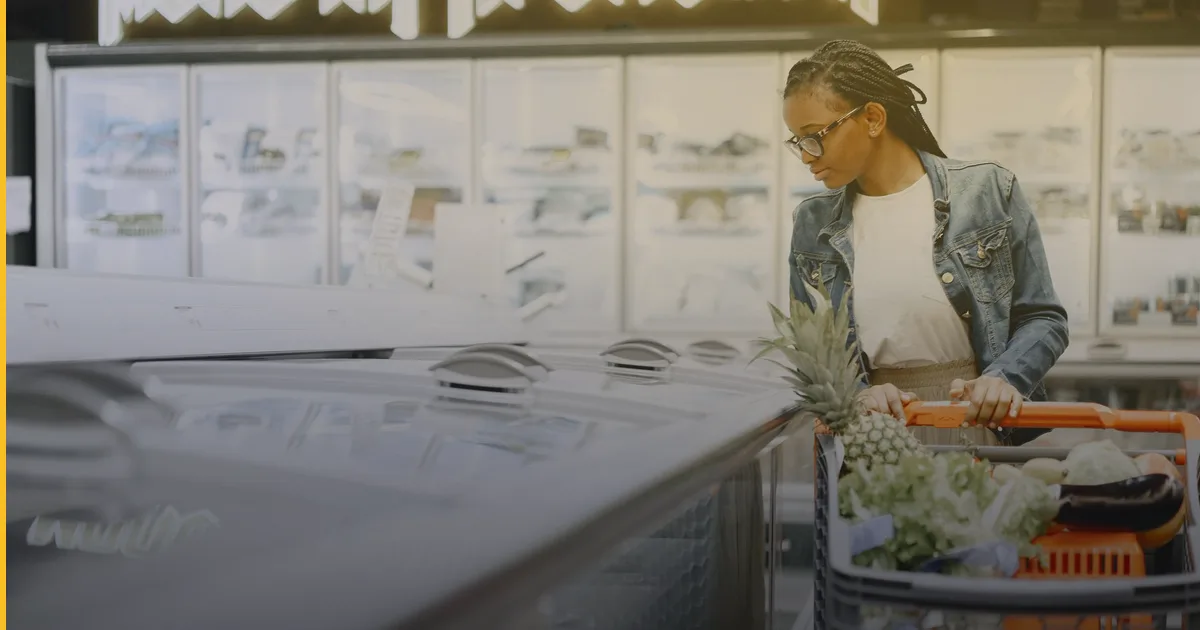
Run a supermarket or grocery chain in Tashkent, Samarkand, or any regional city, and you already know the daily friction: customers calling to ask if an item is in stock, cashiers juggling loyalty cards, and no real record of who your regulars actually are. A Telegram bot CRM for supermarkets and grocery stores solves all three at once — turning a chat app your customers already use into an ordering channel, a loyalty system, and a sales database in one move.
This isn’t a theoretical upgrade. It’s the same pattern already running behind food delivery and pharmacy chains across Uzbekistan: a Telegram bot handles the customer-facing side, a CRM holds the data, and the two talk to each other automatically. For a grocery business, that combination usually pays for itself within a few months.
Why grocery retail in Uzbekistan is a natural fit for Telegram
Uzbekistan has around 27 million Telegram users — about 76% of the country’s internet population, and close to 95% reach among people old enough to shop. WhatsApp and Viber barely register by comparison. For a supermarket, that means your customer base is already inside the one app that matters; you don’t need to build a new habit, just meet people where they are.
Grocery shopping is also repetitive by nature — the same households buy the same categories of goods weekly. That repetition is exactly what a bot plus CRM is built to capture: instead of every visit starting from zero, the system remembers what a customer ordered last time, what they’re likely to want again, and when to nudge them back.
What a supermarket Telegram bot actually does
A well-built bot for a grocery business typically covers:
- Live catalog and stock — customers browse categories, see prices in so’m, and check what’s actually in stock instead of calling the store
- Ordering and delivery slots — cart, address, and preferred delivery window handled inside the chat
- Payments — Payme and Click cover the large majority of Uzbekistan shoppers, with Uzum Bank growing fast; UzCard and Humo card rails sit underneath these
- Loyalty and repeat-order prompts — automatic reminders when a customer’s usual basket is likely due for a refill
- Order status and support — no more phone calls asking “where is my delivery”
None of this requires customers to install a new app. It requires the store to connect the bot to a CRM that actually tracks who’s ordering, how often, and what.
Where the CRM comes in
A bot without a CRM behind it is just a digital till — useful, but forgetful. Connect it to amoCRM (the most widely used CRM among Uzbekistan businesses) or Bitrix24, and every Telegram order becomes a customer record: purchase history, average basket size, last-order date, and segment (regular, lapsed, high-value). Inventory-heavy grocery operations often layer in 1C or MoySklad for stock accuracy, with the CRM syncing on top for the customer-facing side.
This is the same architecture covered in more depth in our guide to CRM integration in Uzbekistan comparing amoCRM and Bitrix24 — most of that decision framework applies directly to grocery retail.
How supermarkets use the data once it’s flowing
Once orders, payments, and customer profiles sit in one place, a few things become possible that weren’t before:
- Segment customers by basket size and order frequency, then run targeted Telegram broadcasts (a promotion on dairy for households that buy dairy weekly, not a blanket blast to everyone).
- Spot which SKUs drive repeat orders and which sit unsold, feeding back into purchasing decisions.
- Automate low-stock alerts to staff before a popular item runs out mid-week.
- Trigger a win-back message when a regular customer hasn’t ordered in two-plus weeks.
Retailers running this kind of setup typically report Telegram-driven ordering accounting for a meaningful share of monthly turnover, and CRM-backed follow-up commonly lifting repeat sales by roughly 30% — patterns seen across Tashkent food and retail businesses, not a guarantee for every store, but a realistic benchmark to plan around.
What it costs and how long it takes
Pricing depends on scope, but Uzbekistan market rates give a useful starting range:
| Package | What’s included | Typical price (so’m) |
|---|---|---|
| Basic ordering bot | Catalog, cart, manual order handoff | 1 500 000 – 3 000 000 |
| Bot + payments + CRM sync | Payme/Click checkout, amoCRM/Bitrix24 integration, order history | 3 000 000 – 5 000 000+ |
| Full CRM + AI agent bot | Above, plus AI-assisted customer replies, loyalty automation, segmentation | 5 000 000+ |
| Ongoing support | Monitoring, updates, small feature additions | from ~$50/month |
A focused MVP — bot, catalog, payment, basic CRM sync — is realistically a matter of weeks, not months, when scoped tightly around one store or chain’s actual workflow.
A simple readiness checklist before you start
- Product catalog exists somewhere structured (spreadsheet, POS export, or 1C/MoySklad)
- You know which payment providers you already use (Payme, Click, Uzum Bank)
- Someone on staff will own responding to bot-generated orders day to day
- You have a CRM already, or are open to picking one (amoCRM is the common default)
- You can define 2-3 customer segments worth targeting differently
Where this fits next to restaurants and general retail
Supermarkets sit between two patterns Fera Tech sees often: the high-frequency, small-basket world of Telegram bot and CRM setups built for restaurants, and the broader retail shop automation patterns common across Uzbekistan. Grocery retail borrows the ordering cadence of the first and the inventory discipline of the second — worth reading either if you’re benchmarking your own setup, and useful background is also in our restaurant automation overview if you run a hybrid grocery-plus-prepared-food operation. For the bigger picture on where Uzbekistan’s automation market is heading, see our 2026 state-of-market overview on AI and business automation in Uzbekistan.
If you haven’t built a Telegram presence at all yet, our complete guide to Telegram bots for business in Uzbekistan is a good starting point before layering CRM on top.
Frequently Asked Questions
Do customers actually use a supermarket bot instead of walking in? Many do, especially for repeat staples and bulk orders — the bot becomes a second, always-open counter rather than a replacement for the physical store.
Which CRM should a grocery business start with? amoCRM is the most common choice among Uzbekistan retailers for its simplicity and Telegram-friendly integrations; Bitrix24 suits larger chains needing deeper inventory and staff-management features.
Can the bot handle both Uzbek and Russian customers? Yes — modern AI-assisted bots handle both languages well, and serving customers in their own language noticeably improves engagement.
Is this only for large supermarket chains? No. A single mid-size grocery store can run a scoped version — catalog plus payments plus basic CRM sync — profitably; the architecture just scales up for chains with more locations and SKUs.
If you’re weighing whether a Telegram bot and CRM setup makes sense for your store, it’s worth a short conversation about your actual catalog, order volume, and staffing — see our services and recent work, then get in touch and we’ll map out what a scoped MVP would look like for your business.
Building something like this?
Fera Tech ships iOS & full-stack apps end-to-end. Tell us about your project.
Start a project